


Underwater and hyperbaric medicine: immersion with specialist doctors
Doctors Anne Henckes, Peter Germonpré, and Mathieu Coulange are dedicated to preventing diving accidents and treating injured divers via hyperbaric chambers in Brest, Brussels, and Marseille. Together, they represent the forefront of underwater and hyperbaric medicine in Europe.
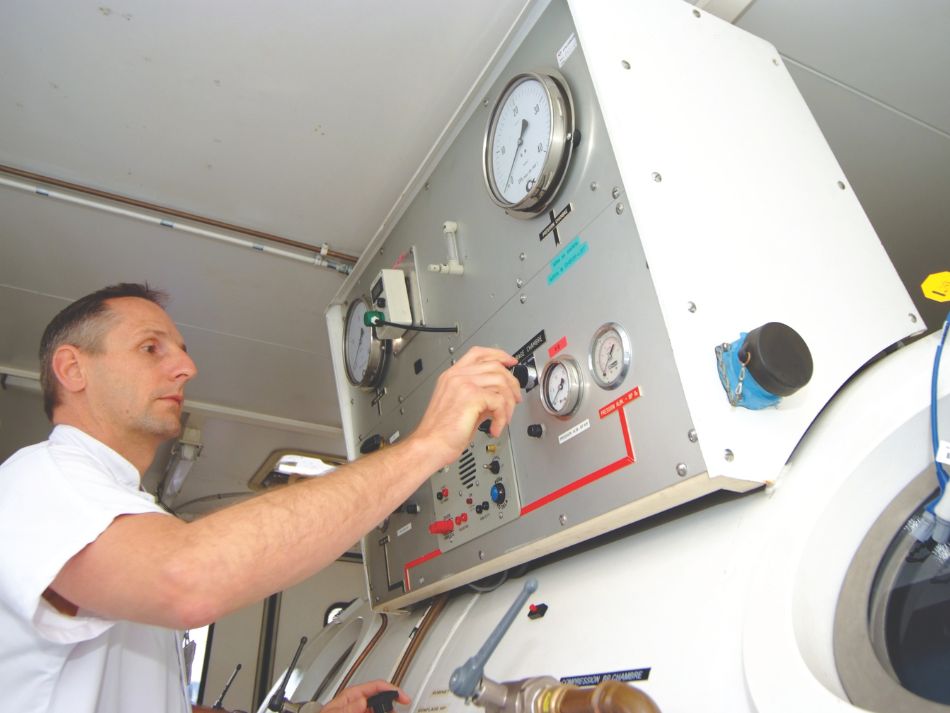
At the heart of the emergency: the hyperbaric medicine service at CHRU Brest
“Get him to Brest as quickly as possible, we will accommodate him.” These are words Dr. Anne Henckes has often repeated since taking charge of the hyperbaric medicine unit at CHRU Brest, on the Cavale Blanche site. She is part of the on-call team—consisting of a doctor and two hyperbaric nurses—operational 24/7 for emergencies. About twenty diving accidents, mostly decompression sickness (DCS), are treated here annually, often following guidance from the SAMU’s regulating doctor.
The diagnosis, sometimes immediate, then requires therapeutic recompression. But some situations remain ambiguous, as Dr. Henckes notes: “I then communicate with the dive manager, as the accuracy of the information is crucial.” The team then prepares the hyperbaric chamber and the appropriate equipment. Depending on the nature and severity of the accident, specific recompression tables and medicinal treatments are established. “We prepare for the worst: it’s easier that way,” she confides.
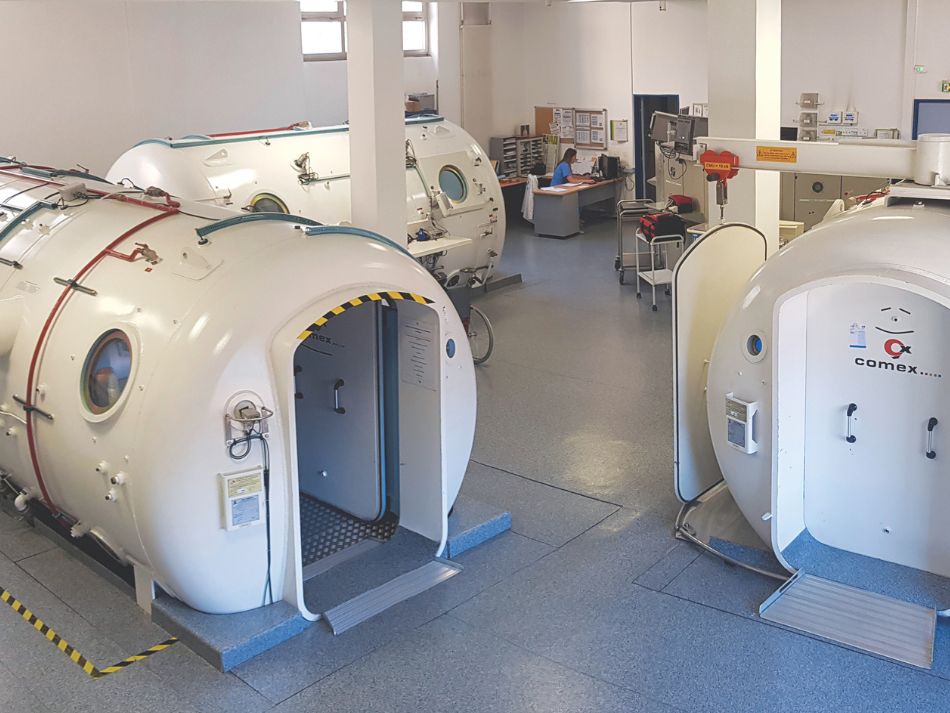
After a clinical examination, setting up an infusion, and a blood draw, the diver is placed in the chamber, initially accompanied by a caregiver who monitors their condition under pressure, especially observing the ability to equalize the ears.
The vocation of a diving doctor
Diving since adolescence, Anne Henckes completed her internship and then her thesis on diving, thus discovering her vocation for underwater and hyperbaric medicine. “Our job is to treat but also to prevent. The chamber allows administering oxygen at a pressure higher than atmospheric to treat various conditions, including those of divers,” she explains.
Some cases still stay with her, like the evacuation of a diver by helicopter, suffering from joint pains and an inner ear DCS, whose condition worsened despite initial treatment. “The chamber doesn’t perform miracles every time. Sometimes, even on a regulatory dive, a severe accident can occur—diving remains a risky activity,” she reminds us.
Did you enjoy this excerpt?
Read the full article.
READING TIME ≈ XX min
Dive into the heart of the PLONGEZ! Magazine
To enjoy this article and its exclusive content, a modest contribution is required.