


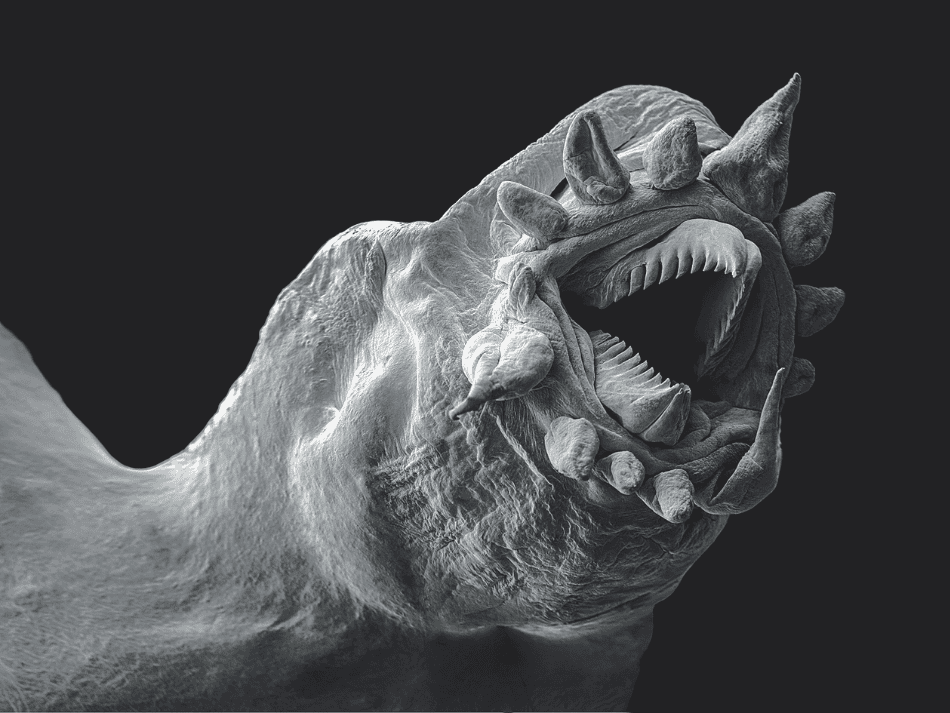
The « Why not the abysses? » project, a bold initiative, led research teams across the world’s oceans. Their quest? The DNA of the tiny creatures that inhabit the depths. Photographer Gilles Martin captured this miniature bestiary, capturing the essence of these unknown beings between Saint-Pierre-et-Miquelon and Brest.
A night aboard the « Why not? »
Aboard the « Why not? », in the heart of the North Atlantic, the excitement is palpable. A sediment « core sample », containing precious secrets, is about to surface. Daniela Zeppilli, Sophie Arnaud-Haond, and Julie Poulain eagerly await the return of the Oktopus, a fishing device they sent over 3,000 meters deep. They hope the ten tubes of the Oktopus will return filled with precious sediments. Work on the samples will start promptly, as sleep is a rare luxury in these crucial moments.
Meiofauna: tiny animals, immense role
The focus of these scientists is entirely on the meiofauna, animals of minute size. The largest specimens barely reach a millimeter, while the smallest measure in hundreds of microns. All are metazoans, multicellular organisms.
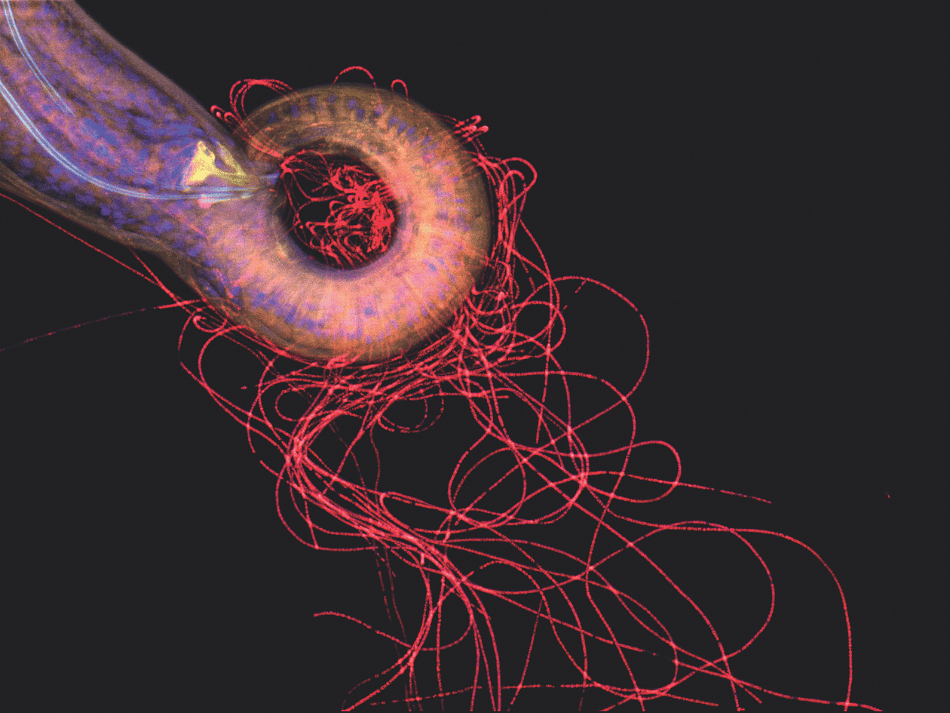
Daniela Zeppilli emphasizes the importance of these creatures: « These little pieces of the puzzle are essential to the functioning of the ecosystem. They have adapted to extreme conditions, surviving enormous pressures, significant temperature variations, and sometimes even the absence of oxygen. Their interactions with bacteria are fascinating. »
These organisms can enlighten us on many topics, including human health and adaptation to climate change. Their DNA holds keys to answering fundamental questions. Daniela Zeppilli stresses the urgency of studying this treasure within reach.
Biomimicry, which involves drawing inspiration from nature to innovate, could greatly benefit from these discoveries. Daniela Zeppilli calls for accelerating research before these species vanish. Artificial intelligence, combined with direct observation of nature, could revolutionize our knowledge.
Did you enjoy this excerpt?
Read the full article.
READING TIME ≈ 9 min
Dive into the heart of PLONGEZ! Magazine
To enjoy this article and its exclusive content, a modest contribution is required.