


Laurent Ballesta, Wildlife Photographer of the Year for the 4th time!
This year, Laurent Ballesta, renowned wildlife photographer, has once again been crowned Wildlife Photographer of the Year for his exceptional portfolio. He opens the doors to a fascinating world for us, that of horseshoe crabs, these enigmatic creatures that have roamed the seabed for 150 million years.
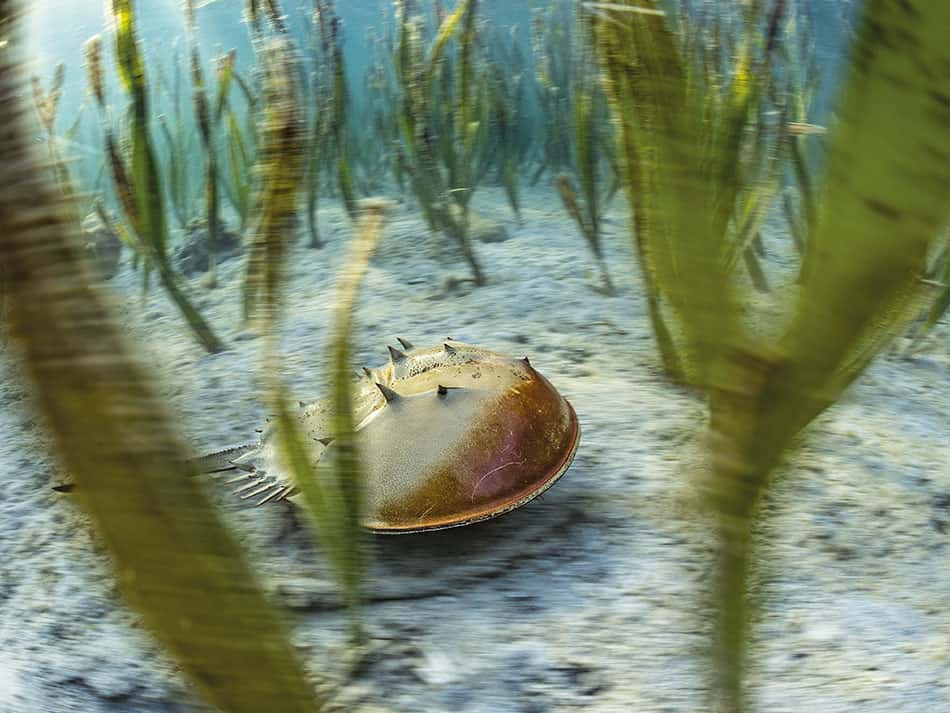
Encounter with a survivor from ancient times
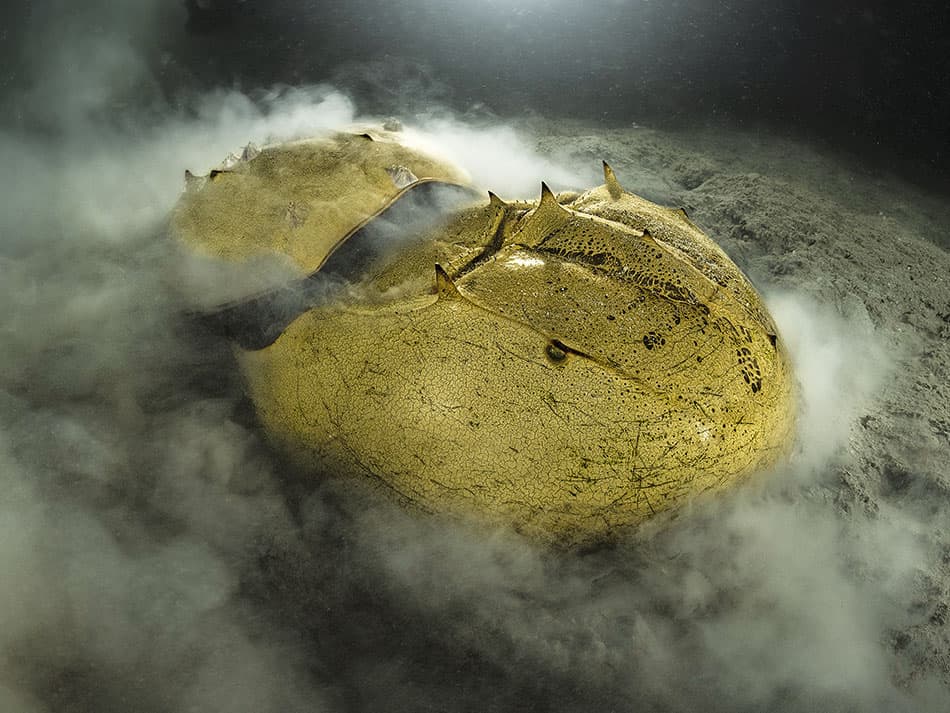
Observing a horseshoe crab is like traveling back in time. Its clumsy movement, both rowing, pedaling, and trotting the seabed, testifies to an existence out of time. Nothing seems to have forced it to evolve. Its robust gait and immutable appearance make it a true survivor, having traversed the ages unaffected by the ecological crises that have decimated other species, even faster ones. The dinosaurs are gone, but the horseshoe crab is still here. A discreet survivor commanding respect.
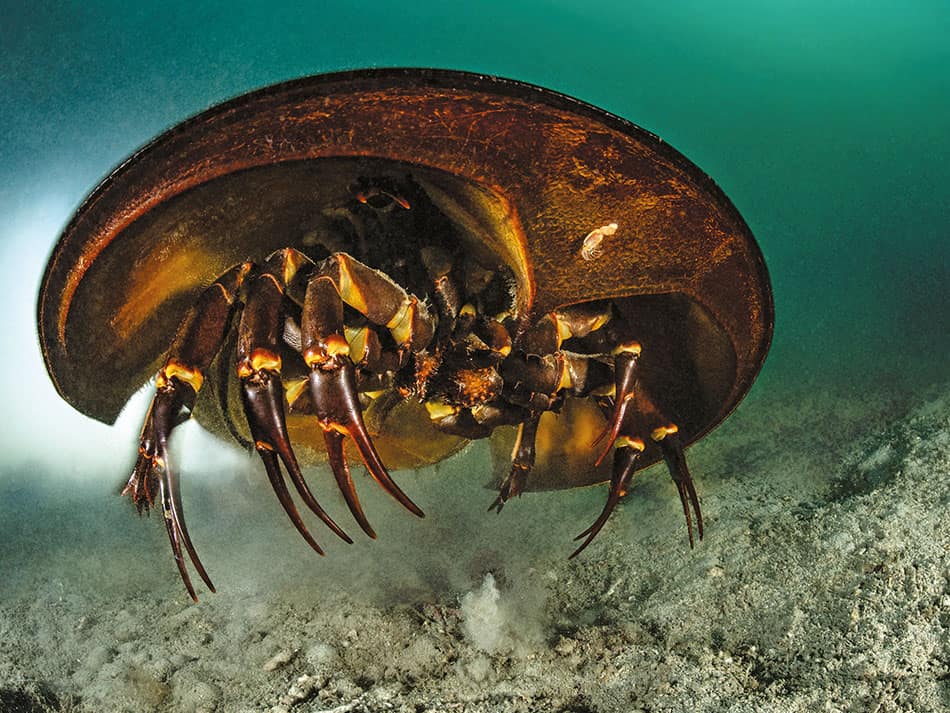
A living fossil unchanged for eons
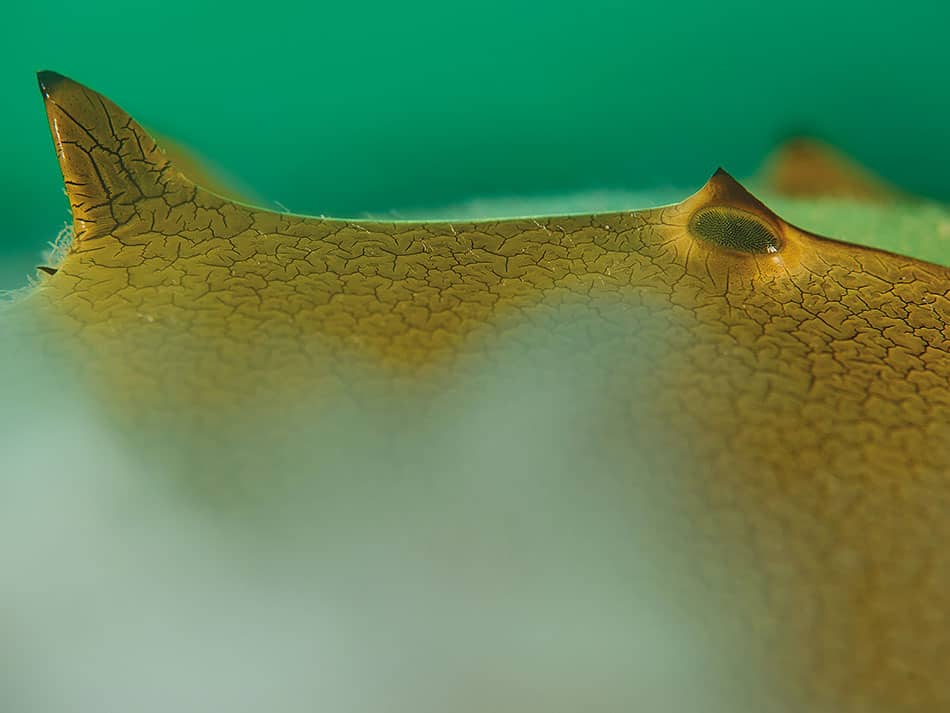
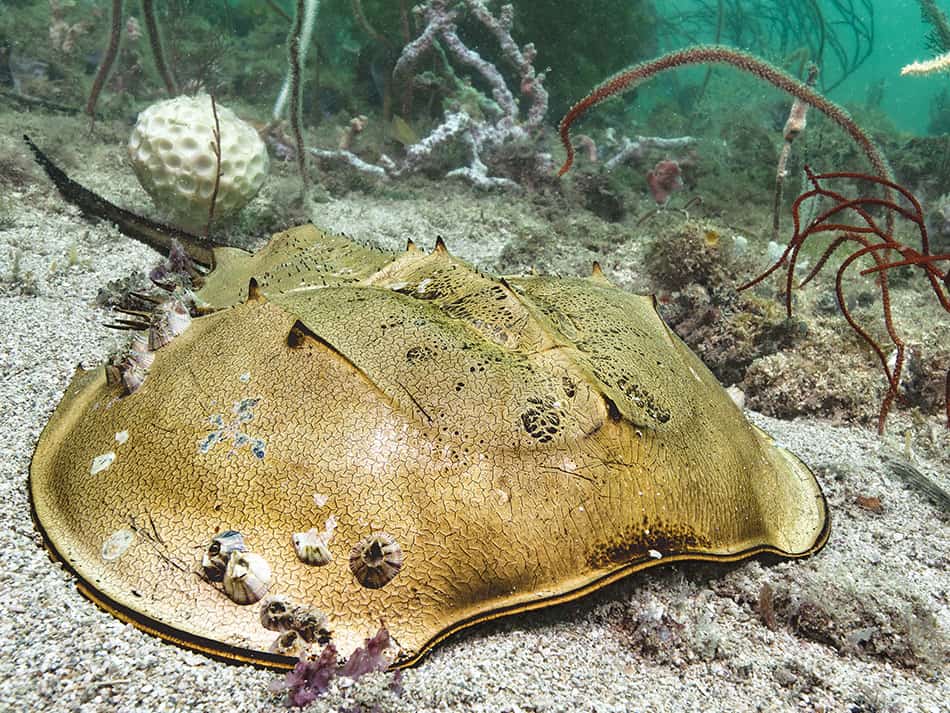
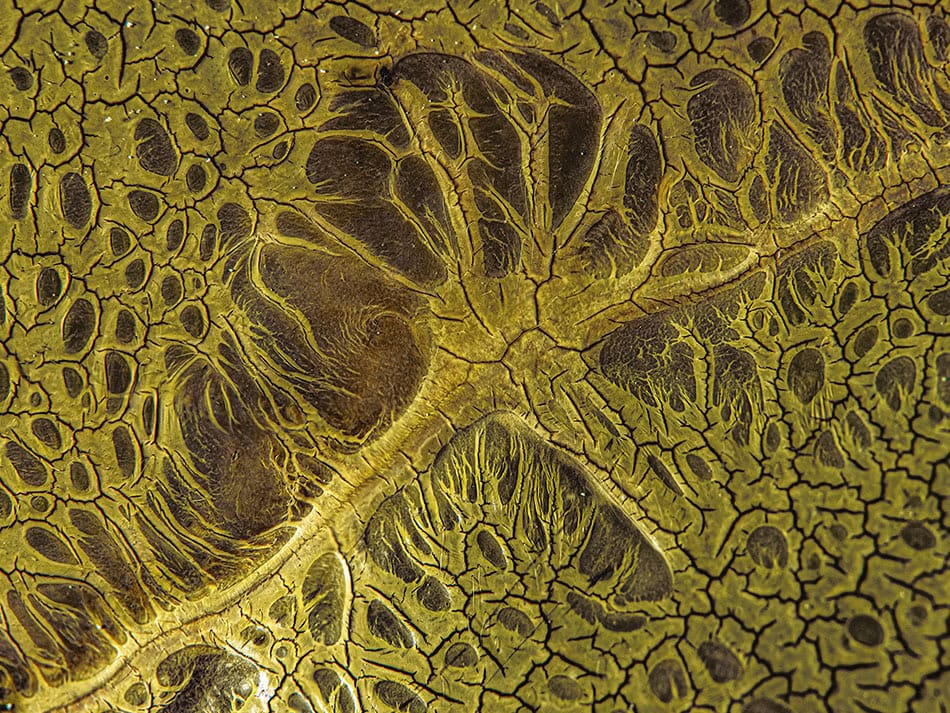
For 150 million years, the horseshoe crab has roamed the seabeds without its morphology evolving. Laurent Ballesta shares his experience: « I have been swimming alongside it for just 3 hours, and I follow it without difficulty. It looks more like an armored vehicle than a fighter jet. » This marine arthropod, closer to a giant woodlouse than a lobster, has a simple shell: a single circular carapace covering its head and thorax, adorned with a few deterrent spurs. Its « eyes » are lateral periscopes, sensors sensitive to light distinguishing day from night, more than true vision organs.
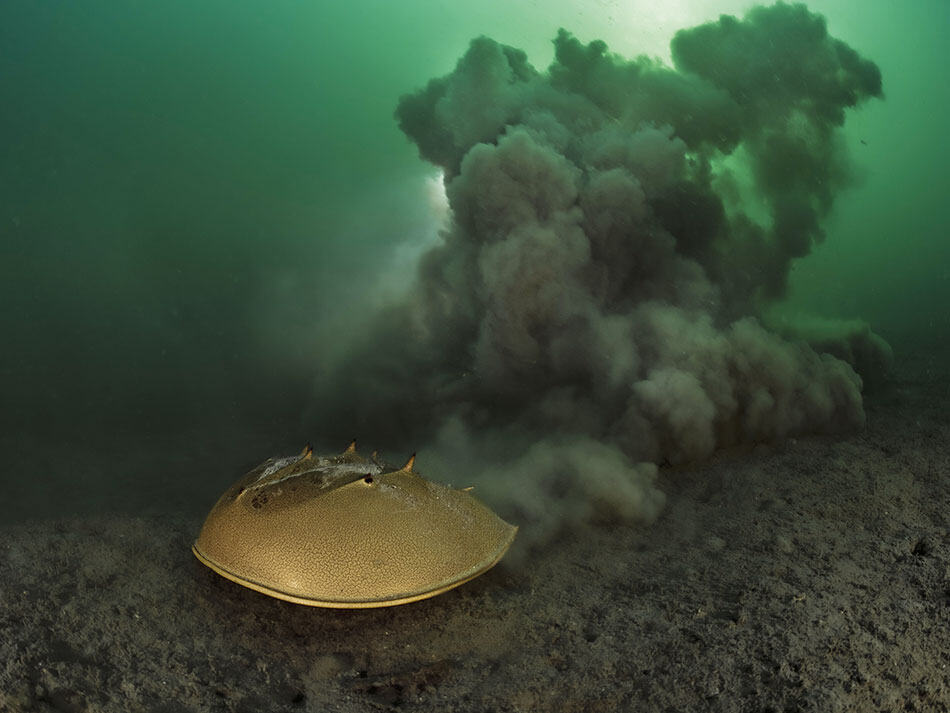
Night dive and discovery of Pangatalan Island
After three hours of exploration, night falls quickly underwater, a phenomenon due to refraction. The sun’s rays, angled, withdraw, plunging the ocean into darkness. The dive concludes, and the team returns to Pangatalan Island, a tiny 4-hectare islet northeast of Palawan, Philippines. An unexpected home awaits them, the result of the hard work of Fred and Chris Tardieux, a passionate French couple who chose to settle there and restore its ecosystem.
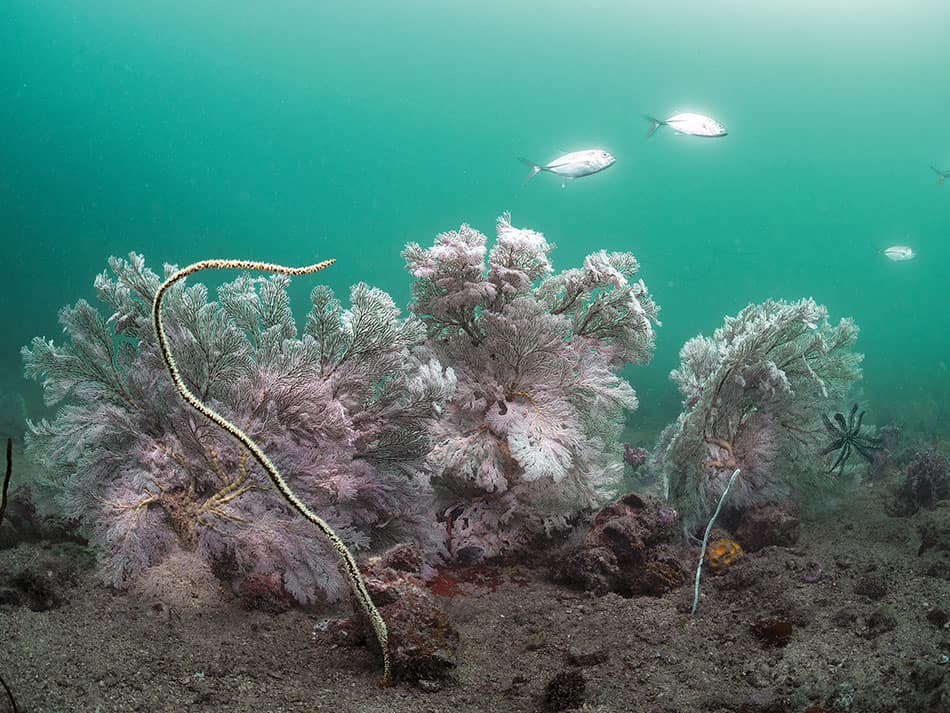
Pangatalan: An island rising from its ashes
For ten years, Fred and Chris, assisted by local inhabitants, replanted 60,000 trees and plants, as well as 10,000 mangroves to reform the mangrove. They then began restoring the coral reef, calling on marine biologist Thomas Pavy to establish an ecological diagnosis and work towards classifying the island as a nature reserve. Together, they installed nearly 300 concrete modules to secure broken corals, thus promoting the regrowth of natural reefs. In 2016, the island was officially declared a marine protected area by the Philippine government.
An ecosystem in recovery
Pangatalan has come a long way, having suffered deforestation and overfishing. Despite this, hope is reborn. The island is now protected, even if it means turning away local fishermen, facing a survival dilemma. The reef slowly comes back to life, and Laurent Ballesta’s team is here to study and illustrate this renaissance. While large fish are slow to return, biodiversity is present and ready to welcome sharks and dugongs.
Photography and hope: Capturing the rebirth
While waiting for the return of biodiversity, the dives continue. Florian creates 3D photogrammetric models of the artificial reefs to track their evolution. For Laurent Ballesta, photography takes on a new dimension: « It is no longer just about sublimating, but illustrating hope, seeking signs of renewal. » The greenish waters of the bay, rich in plankton, nourish and heal the recovering ecosystem.
In search of traces:
Every morning, the horseshoe crabs are punctual. Cédric, Laurent Ballesta’s assistant, tirelessly searches the muddy plain to locate them, tracking their imprints. The horseshoe crab’s tail leaves a slight furrow in its wake, an ephemeral trace that Cédric strives to follow. One day, he discovers a double trail and follows it to find a couple mating. The male, equipped with a notch to cling to his partner, proves to be unassertive, and the mating lasts 15 days, during which the female has to bear this burden.
Reproduction and symbiosis:
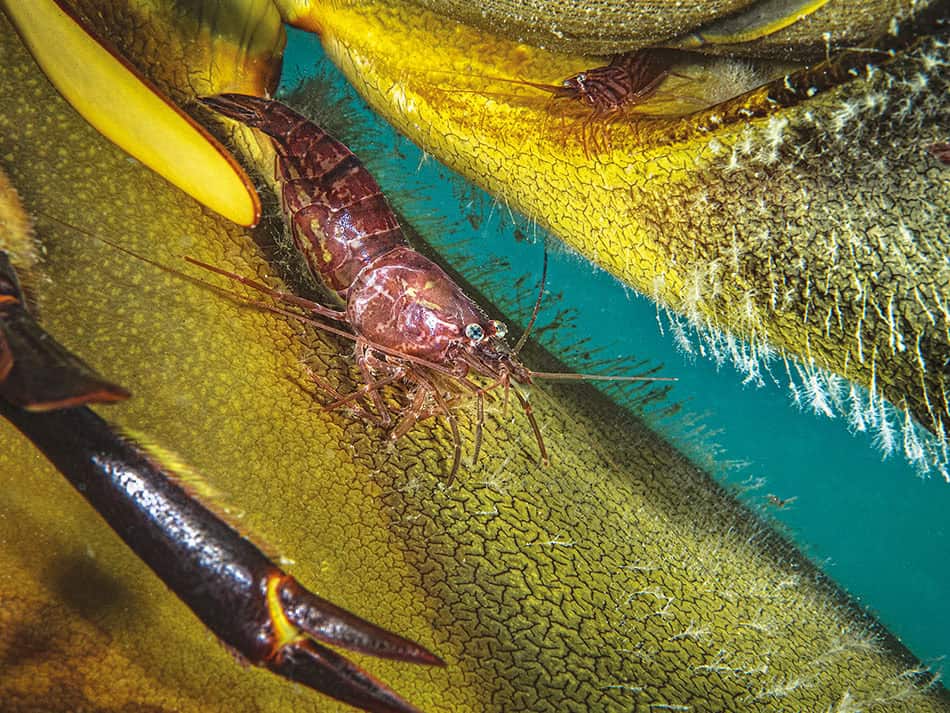
After mating, the females head to the shore to lay their eggs in the sand. Freed from their reproductive duties, the horseshoe crabs return to the depths, escorted by golden trevallies, opportunistic fish taking advantage of the horseshoe crab’s foraging. Under the carapace of the latter, another world is revealed: a population of shrimp living between its legs.
The human threat:
The peaceful life of the horseshoe crab might seem eternal, but man has discovered a treasure within it: its blue blood. This hemocyanin, containing Amebocyte Lysate, is essential for detecting bacteria in vaccines. The exorbitant price of this blood ($14,000 per liter) leads to the capture of 500,000 horseshoe crabs each year, of which 30% of the blood is taken. Weakened, the survivors often die after the operation. In Delaware Bay, 75% of horseshoe crabs have disappeared since the 1980s, classifying the species as vulnerable. Fortunately, in Pangatalan, the horseshoe crab finds a haven. Protecting the island is to protect these creatures. One island, one horseshoe crab, one idyll.
This article, originally written by Laurent Ballesta for the print edition of PLONGEZ!, was adapted for the web.
Photos © Laurent Ballesta.