


A rainbow of color
Coralligenous is the richest and most colorful underwater habitat in the Mediterranean. It is primarily formed by the accumulation of limestone produced by encrusting red algae known as coralline algae. The dominant colors of the coralligenous vary according to depth, light, and the species present. Generally, red, pink, and purple are observed in areas dominated by algae, yellow and ochre with sponges, some gorgonians or even ascidians. Coralligenous can show white variations with bryozoans or, unfortunately, when it presents colonies of dead organisms. It is dark purple to red with the gorgonians that make its reputation. It is green or brown with its algae and sometimes all bluish when light is scarce.
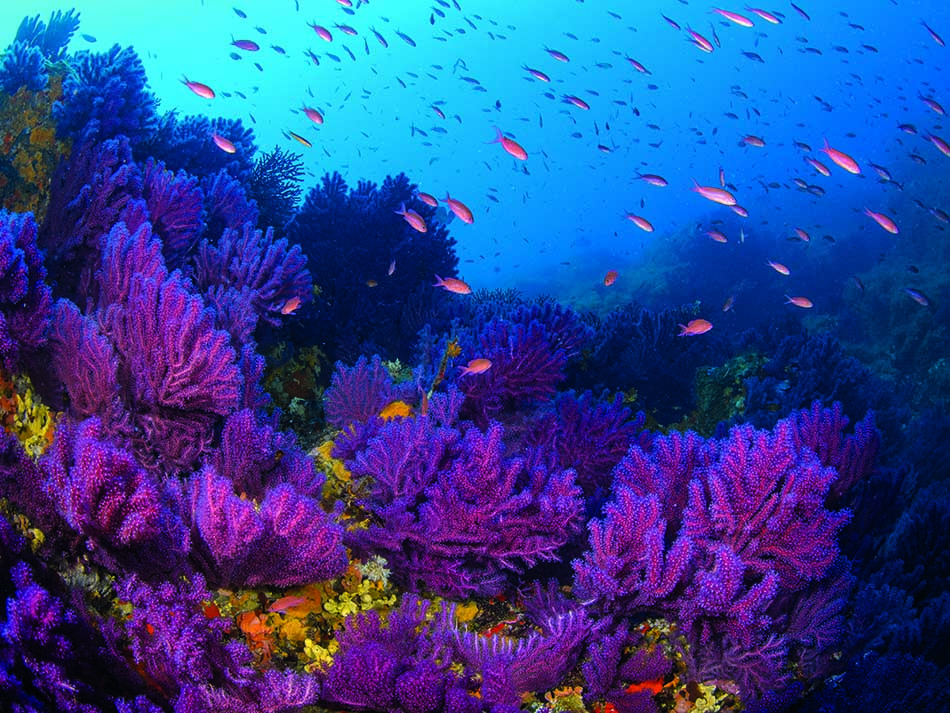
The whole forms a very colorful and complex landscape, typical of shaded and dimly lit areas between 20 and 100 meters deep. Its beauty is comparable to tropical coral reefs. Coralligenous reefs cover a small cumulative surface of 5,178 hectares on our coastline. This figure is far less significant than our Posidonia meadows (80,000 hectares). Its growth is very slow, just a few millimeters per year.
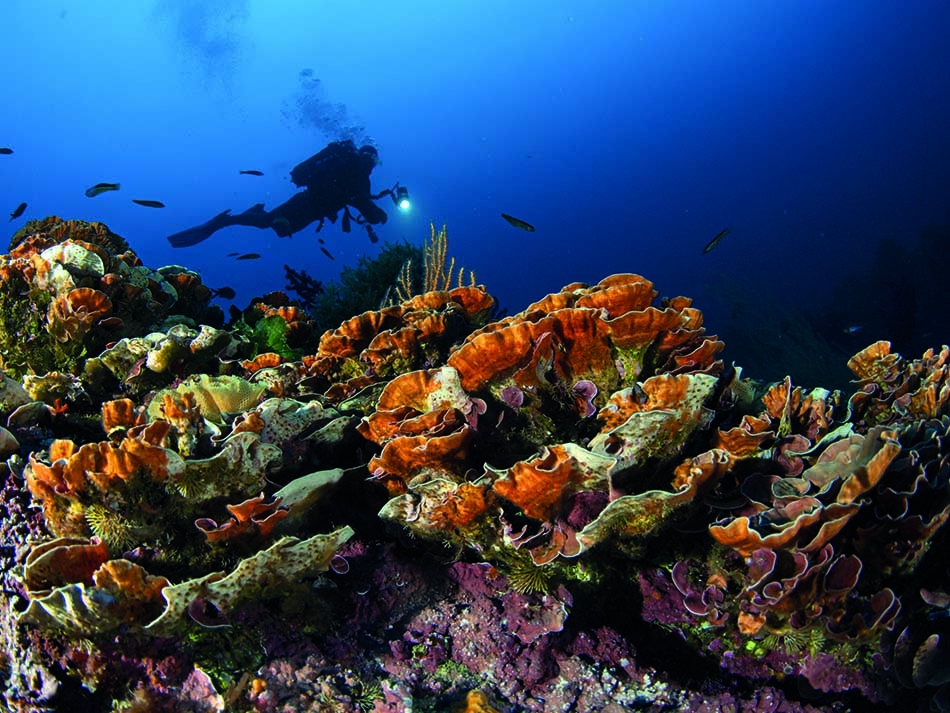
Divers’ favorite
This whole assembly of color and form attracts. All the more so, as coralligenous is a habitat for many species of fish and crustaceans, from lobsters to groupers, passing through red coral and gorgonians. The number of species present in coralligenous is estimated at 1800. This represents 15 to 20% of the known species in the Mediterranean. Some studies mention an average density of 300 different species per square meter of coralligenous. This flourishing life makes it a hot spot for scuba diving.
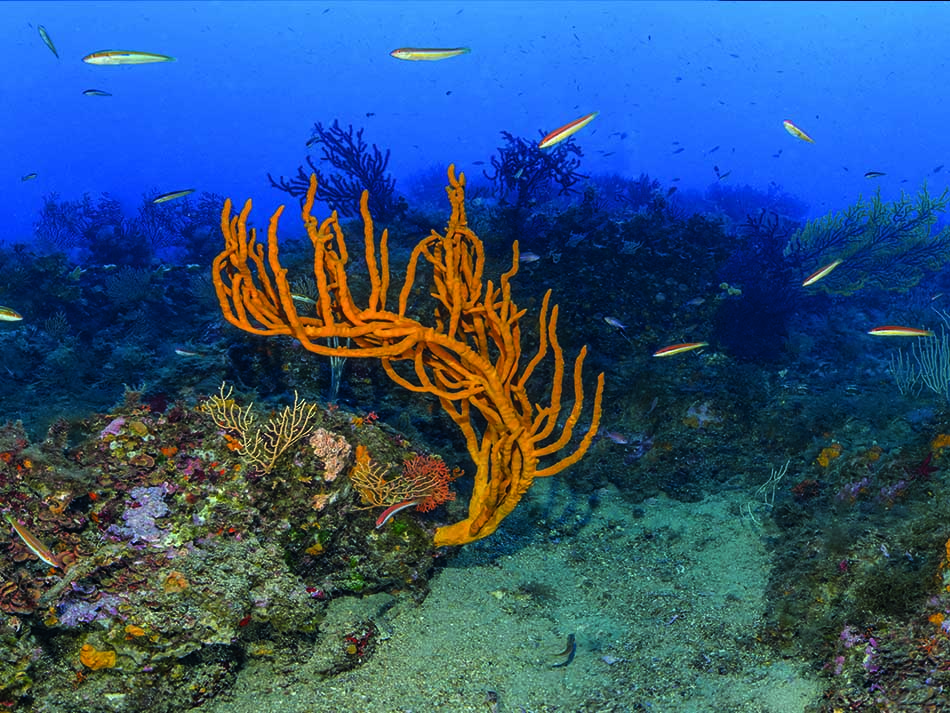
Under pressure
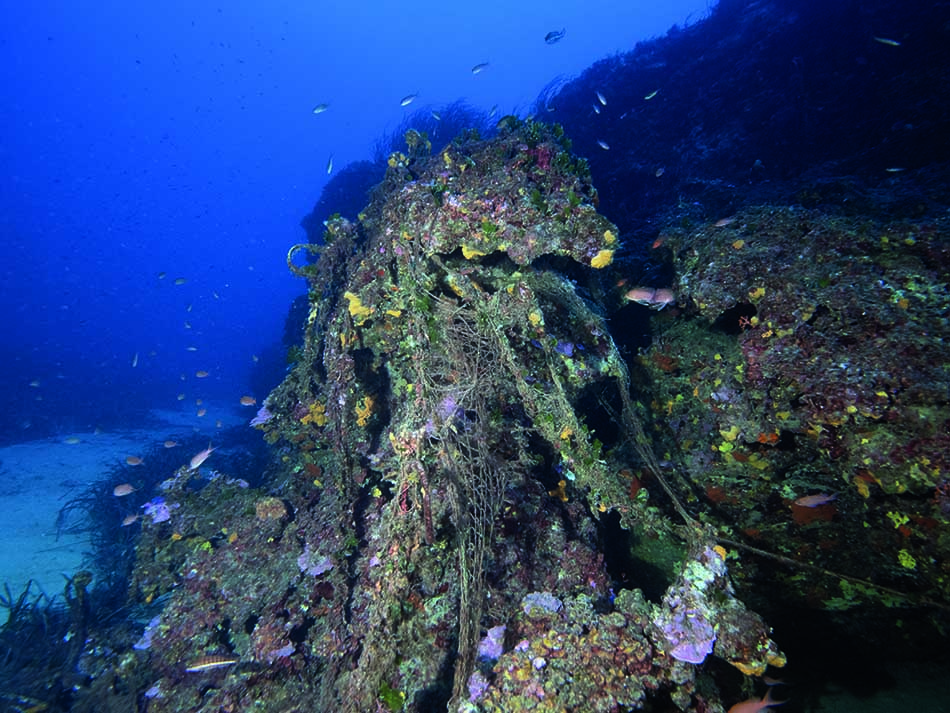
Due to its beauty and ecological richness, the coralligenous is under the pressure of maritime activities. Professional and amateur fishing, such as nets, impact the natural environment. To date, abandoned fishing gear is found on more than 50% of coralligenous areas. The anchoring of ships, although on a much smaller scale than for Posidonia, alters some sites by notably destroying red gorgonian assemblages. Scuba diving is often cited as a source of alteration to coralligenous. Studies conducted on the subject have concluded that there is a zero or negligible impact on the habitat, beyond the disturbance of species which sometimes seems overestimated. The most significant threat to this habitat is represented by the effects of climate change. Marine heatwaves cause sometimes massive and localized mortality of gorgonians, to the great dismay of scuba divers who go from a landscape of lush marine forest to a scene of desolation. Fortunately, the resilience of the marine environment provides some hope as shown by regrowth and recovery observed since the last heatwave in summer 2023.
The hope of restoration
Like the Posidonia meadows, work is underway to define restoration solutions for coralligenous. While it is important to remember that our primary ambition should be not to damage and destroy marine habitats, we can only commend the ambition to be able to have technical solutions tomorrow to recover lost ecological functions or even to locally recover certain extinct species. The road is long, but the first works such as the RESCOR and OP Coral experiments conducted on the Villefranche site show very encouraging results.
Wonders time and again
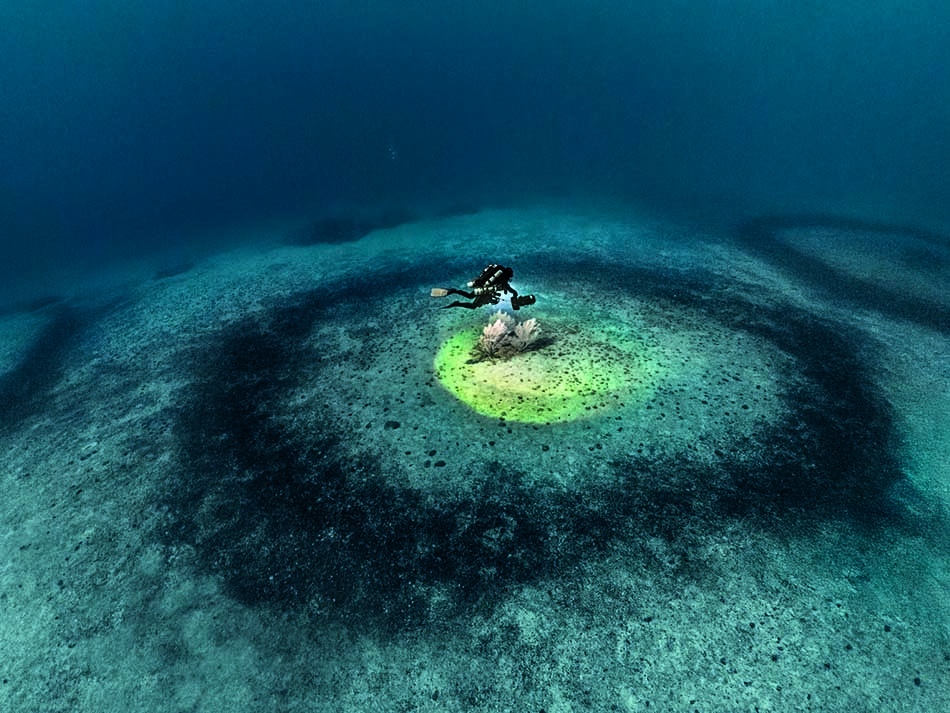
One cannot talk about coralligenous without mentioning the latest GOMBESSA expedition on the rings of Cap Corse. At about a hundred meters deep, these rings, whose geographic location is not far from the coast, once again demonstrate the limits of our knowledge and understanding of the Mediterranean’s functioning. These atypical structures harbor exceptional marine life, some species of which are illustrated or even described for the first time. This gives us additional hope that the Mediterranean still holds many beautiful discoveries for us and encourages us all the more to work towards its protection.
For more information
Medtrix: Surveillance notebook n°22
Nicolas Barraqué