


The « sea angels, » belonging to the Pomacanthidae family, are iconic fish of tropical seas. Although the majority of species are found in the Indo-Pacific basin, including the Red Sea and the Persian Gulf, some also inhabit the Atlantic Ocean, notably in the Caribbean Sea and the Gulf of Mexico. This family of fish dates back about 3 million years, long before the closing of the Isthmus of Panama, which isolated Pacific populations from Atlantic ones.
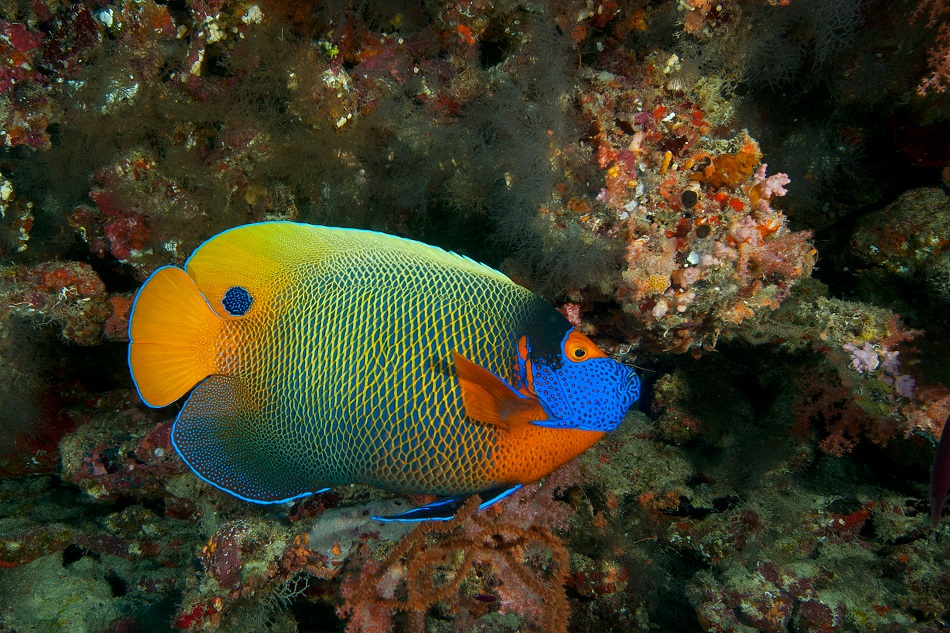
With a laterally compressed body and adorned with bright colors, angelfish are among the most impressive species of the reef. They share some similarities with butterflyfish but are distinguished by the presence of developed preopercular spines, which earned them the name Pomacanthidae, a Greek term meaning « spiny cover. »
Morphological characteristics
Angelfish have a small mouth, unique among teleosts, as it is fully protractile, unlike most fish that can only project their upper jaw. They display large pectoral fins and rounded caudal fins, generally adorned with filaments.
Size
- The largest species, the gray angelfish (Pomacanthus arcuatus), can reach 60 cm.
- Members of the genus Centropyge do not exceed 10 to 15 cm.
Smaller species are prized by aquarists, while the larger ones are sometimes fished for consumption.
A dream for photographers
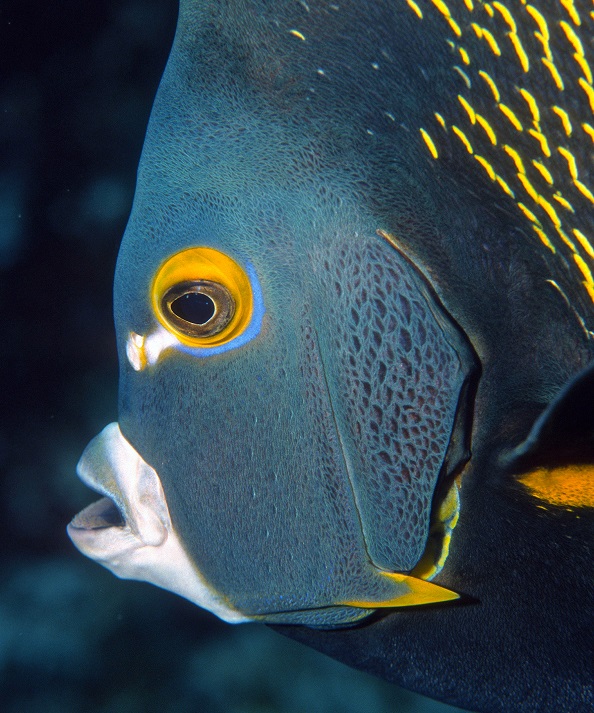
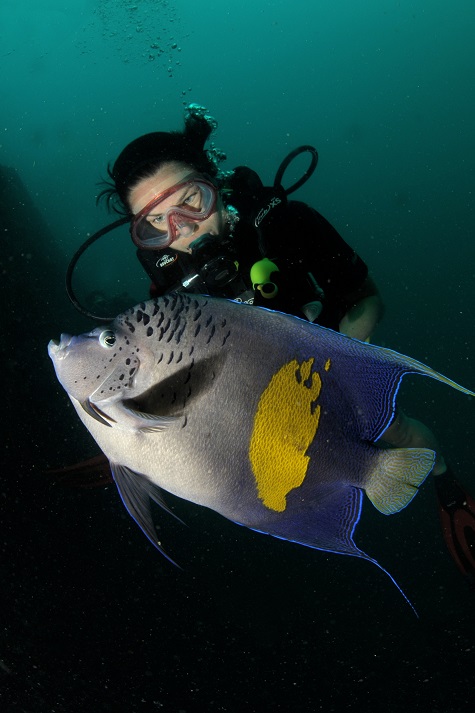
Angelfish are often encountered at less than 20 meters deep, especially near coral reefs, making them choice subjects for underwater photographers. These species do not hesitate to approach divers, making image captures particularly rewarding.
Habitat and diet
Species of the genus Centropyge primarily feed on filamentous algae, while those of the genus Genicanthus prefer zooplankton. Most angelfish feed on benthic invertebrates such as sponges and bryozoans, thus playing a crucial role in the reef ecosystem by regulating the proliferation of sponges that risk smothering corals.
Enjoyed this excerpt?
Read the full article.
READING TIME ≈ 18 min
Dive into the heart of the PLONGEZ! Magazine
To enjoy this article and its exclusive content, a modest contribution is required.