


Entering the marine world is a radically different experience whether one is a dolphin, fish, or crustacean. All, whether they start their lives in the larval state or in a tiny already developed form, must face numerous trials to thrive fully in the water.
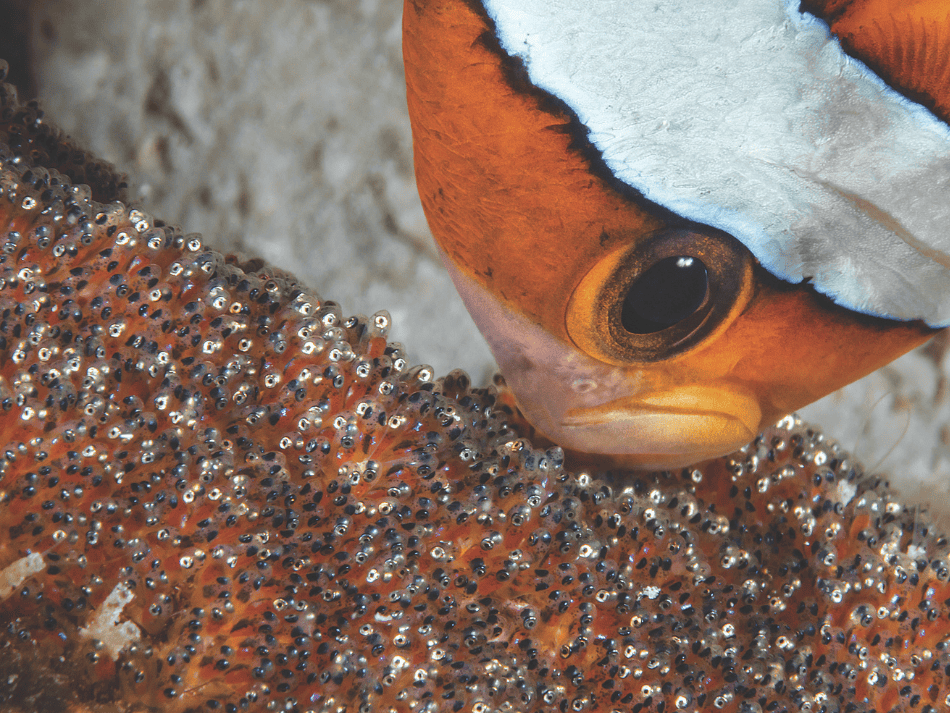
Birth in Fish: A Matter of Survival
Most fish are born from an oocyte released by the female, then fertilized by the male’s milt. The egg thus created develops, sometimes under parental supervision, sometimes set adrift by currents. Pelagic species leave their eggs to drift in the open sea, unprotected. Hatching occurs when internal oxygen is depleted.
Ichthyoplankton: A Risky Journey
The fish larva, often dissimilar to the adult and needing to undergo metamorphoses, discovers the ocean alone. These larvae form the ichthyoplankton, whose entry into the world is perilous. Predators (siphonophores, copepod crustaceans, plankton-eating fish) are numerous obstacles to overcome. Transparency and dispersion offer limited protection: 99% of the larvae perish. Pelagic fish compensate by laying a colossal number of eggs. The ocean sunfish (Mola mola), for example, can lay up to 300 million eggs per year.
Did you enjoy this excerpt?
Read the full article.
READING TIME ≈ 6 min
Dive into the heart of PLONGEZ! Magazine
To enjoy this article and its exclusive content, a modest contribution is required.