


The general public can finally admire the prehistoric art treasure that diver Henri Cosquer discovered in 1985. Dive with us into the history of this incredible discovery, explore three decades of in-depth studies of the cave and uncover the secrets of the construction of its replica, a colossal project that lasted three years.
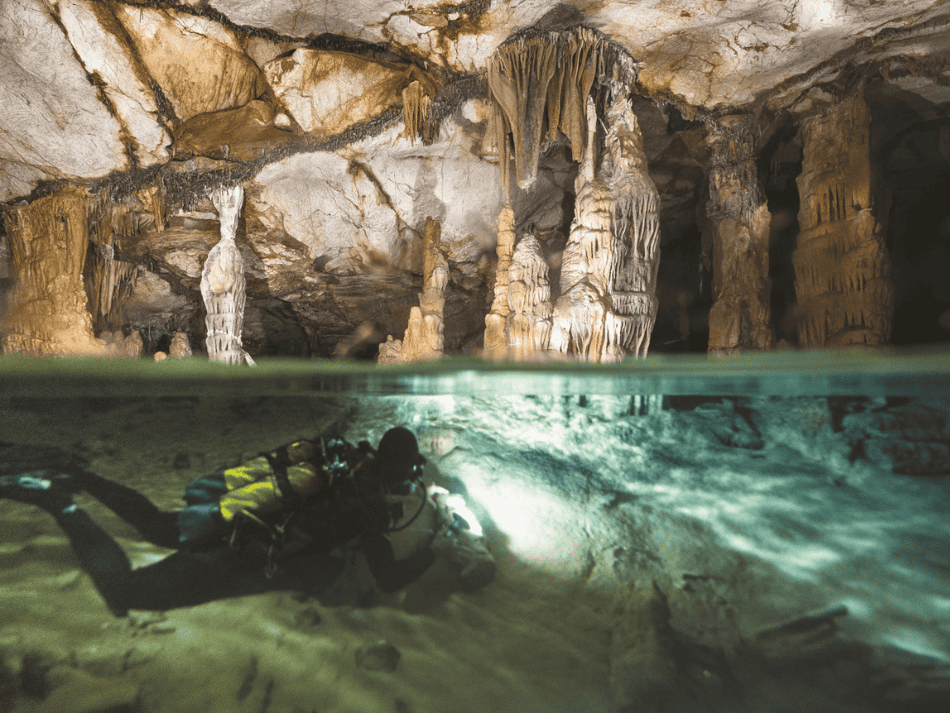
The world’s first submerged cave
Like Henri Cosquer, many cave divers have explored the submerged galleries of the Calanques, hoping to make a major discovery. But it was this passionate diver, who was not searching for anything in particular, who dared to venture alone into a narrow passage at Cape Morgiou, 37 meters deep. Here are their intertwining stories.
A protected site
Classified as a historic monument for thirty years, access to the Cosquer cave is strictly regulated. A metal gate, located at the entrance of the tunnel 37 meters deep, prohibits entry. Only a team authorized by the DRAC Provence-Alpes-Côte d’Azur (Regional Directorate of Cultural Affairs) is allowed to enter.
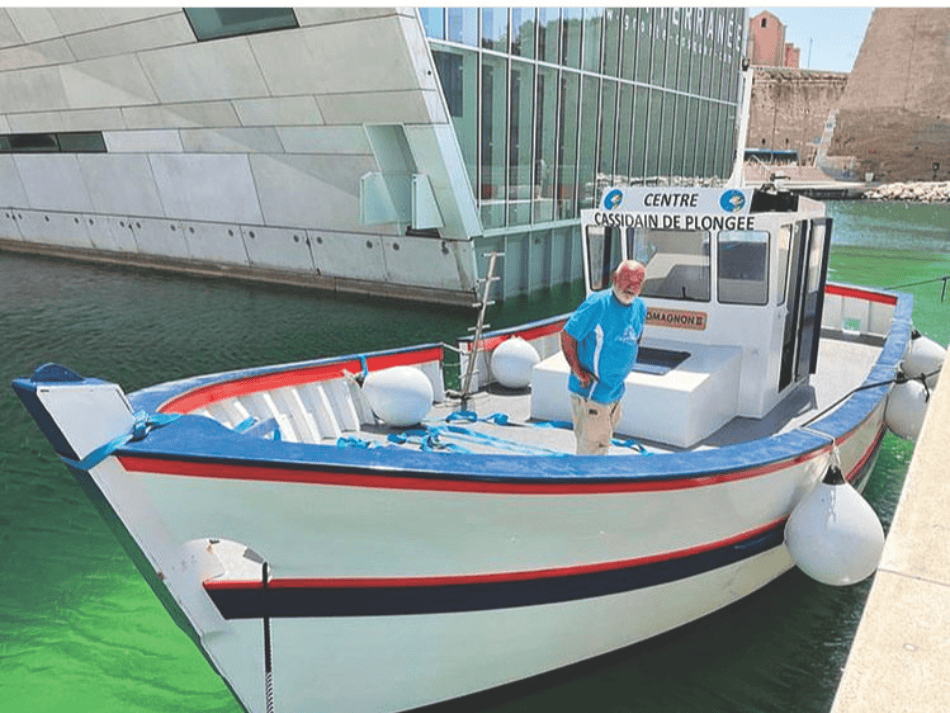
Previously, the access was free and divers explored the depths of Cape Morgiou. The Triperie cave, filmed in the 1960s by Commandant Cousteau’s team, was a popular diving spot. Henri Cosquer, from Martigues, knew this site perfectly. A diver and helmet diver, he took over the Cassidaine Diving Center from his friend Jean-Claude Cayol in the 1980s.
During his free time, he explored the submerged cliffs of the Calanques: « All the water from the Sainte-Victoire mountain and the Sainte-Baume massif flows out between Cassis and Marseille. To drain, the rainwater network has meandered everywhere in the rock. On this section of coast, there are so many caves and passages. I have visited many cavities! » He reserved these dives for the off season, « when you are calm in your mind, and don’t have the club to manage. »
Did you enjoy this excerpt?
Read the full article.
READING TIME ≈ 10 min
Dive into the heart of the magazine PLONGEZ!
To enjoy this article and its exclusive content, a modest contribution is required.