


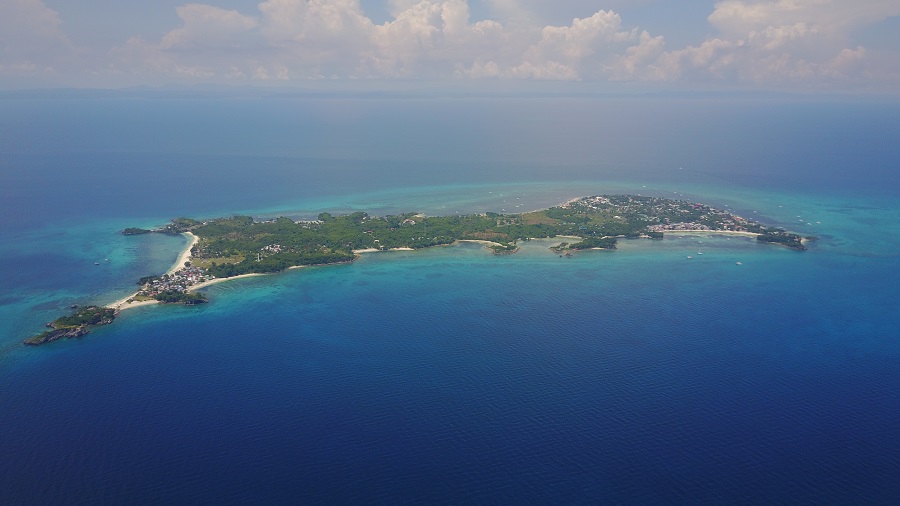
L’îthe paradisiacal has gained a worlédwide reputation grâce à owing to the preésence of thresher sharks, and the site of Monad Shoal has undoubtedly become, désormais, the most famous délèive site in the Philippines. But the underwater world of Malapascua is by no means limited to large sharks, far from it ! You will encounter rare andèastonishing species, in unique underwater landscapes. éThe exact origins of the name, Malapascua, remain uncertain. The theory posits that it means « bad Easter, » granted by Spanish sailors who discovered this island at Easter, during a storm, while their supplies were running out, making them particularly « grumpy »! To reach the island, located off the northern tip of Cebu, you will need to take a flight to Mactan-Cebu International Airport, be driven in a jeepney, taxi, or bus for three to four hours to the small Maya port, and finally, take a short trip aboard a banka (traditional outrigger boat). There are no cars on Malapascua, and the island is bordered by white sand beaches. There is much to admire both above and below the surface, and some people end up never wanting to leave.
Monad Shoal, the thresher sharks’ hauntMalapascua’s iconic dive, Monad Shoal, is located about 30 or 40 minutes southeast of the island. The site was discovered by fishermen who often engaged in dynamite fishing there. Legend has it there were so many sharks, of various species, that the fishermen had to throw two charges because the dead fish from the first explosion were all eaten by sharks. In the early ’90s, divers heard about this underwater « seamount » infested with sharks and went to explore it. They found thresher sharks and noticed that the best time to see them was at dawn when the sharks rise from the depths to position themselves at the cleaning stations. Diving with thresher sharks was born, and word quickly spread.
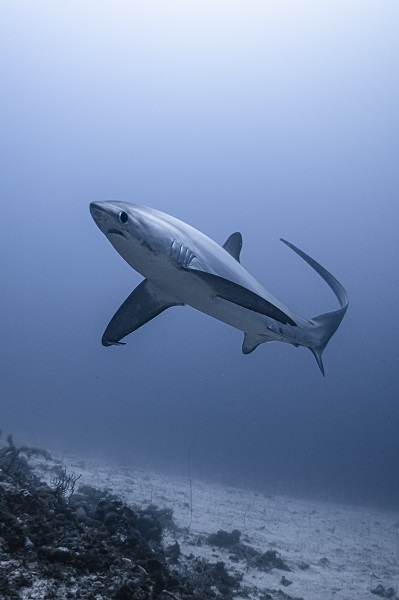
Wanting to dive with the thresher shark primarily involves accepting that you have to get up dreadfully early, with a strong desire to go back to sleep. But once that feeling is set aside, how can you not smile from ear to ear realizing there’s no better way to start your day! Thresher sharks habitually visit the cleaning stations at sunrise: is it because cleaner fish have empty stomachs then and are thus more motivated to rid the sharks of their parasites?Be patientDiving with thresher sharks is an exercise in patience because nothing is ever really guaranteed, although, at this spot, the chances of seeing them are particularly high. And it often takes just a few seconds for your dive, which seemed disappointing, to instantly turn into an unforgettable moment. Thus, there’s no need to grow impatient, just keep a positive mindset while the immersion time slowly ticks by. The sight of these elegant animals, emerging suddenly from the depths, their long characteristic tails sweeping quietly through the water, will surely amaze you. Endowed with a mouth as small as their eyes are large, they use their long tails to stun small fish and make them their daily meals. A research program conducted on Pescador Island, as well as in Cebu, confirmed that threshers indeed use their tails as hunting weapons. However, Monad Shoal has never been officially listed as a hunting spot for thresher sharks, but rather as a cleaning site.
There are three species of thresher sharks: the common (Alopias vulpinus), the pelagic (Alopias pelagicus) and the « bigeye » thresher (Alopias superciliosus ou A. profundus). The pelagic, with a lovely bluish hue, is the one frequently encountered here, and although it is the smallest of the three species, it still measures 3 meters long, including the tail. A shy and solitary shark, the thresher spends most of its time hunting in deep waters, well beyond recreational diving limits, though it occasionally breaches the surface with an acrobatic jump—a reason to keep a camera handy during surface intervals. Monad Shoal is known as the best place in the world to reliably see this elusive shark, making it a must-visit spot for all serious shark lovers!
Gato Island tunnelAmong divers, the saying goes: « You come to Malapascua for Monad, you stay for Gato. » About an hour’s sailing northwest of Malapascua lies Gato Island (cat, in Spanish). It’s said to be named after a rock wall resembling a feline, but if you can’t spot this feature, you are certainly not alone!
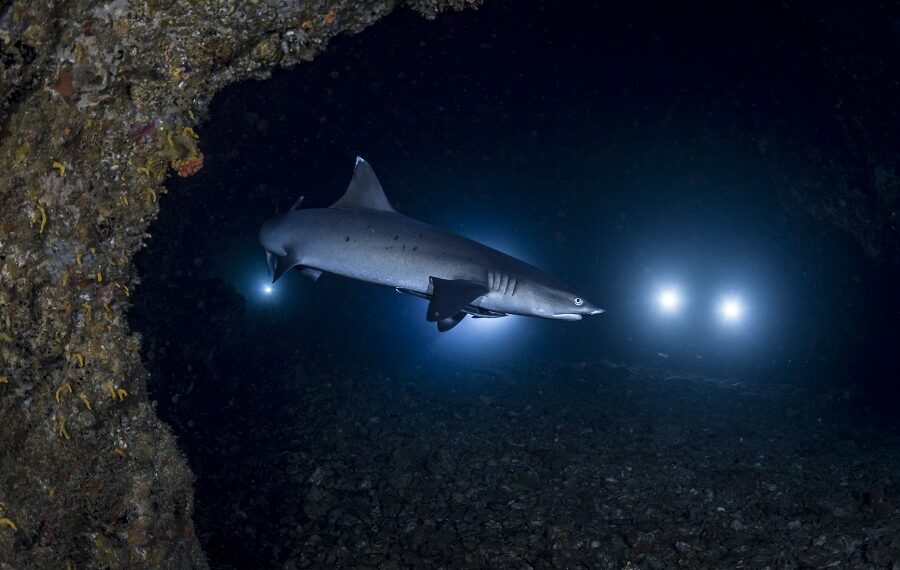
Cavern is the iconic dive of Gato, exploring an underwater tunnel through the island. It’s an exhilarating dive and, as the tunnel is large enough to accommodate several people, it’s open to all reasonably experienced divers. Starting from the large entrance located just 5 meters deep, you enter a big chamber trapping an air pocket at its top. Pop your head out, and you’ll discover a high-ceilinged cave, home to many birds and bats that can only access it at low tide. If you remove your mask and regulator, don’t be surprised by the strong ammonia smell!
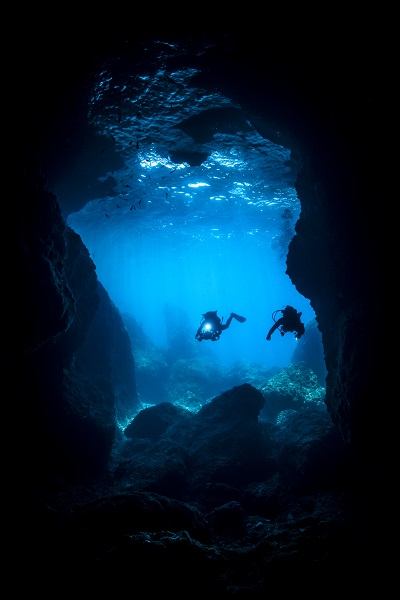
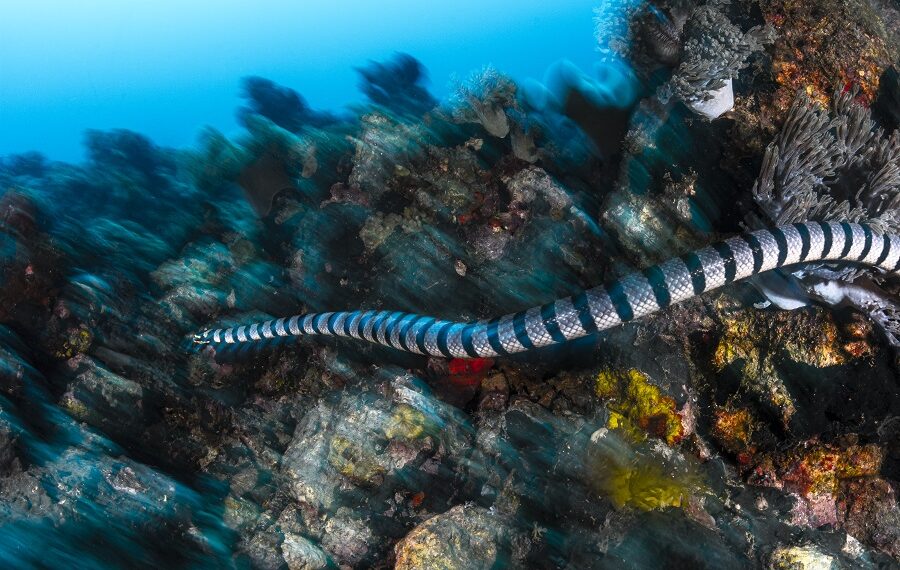
Back underwater, you may find an old piece of rope serving as a hanging garden for soft corals and bivalves. The hermit crabs will scatter in your light beams. A broad blue light at the end of the tunnel? That’s the exit opening, located 12 meters deep. The white-tip reef sharks (Carcharhinus albimarginatus) are island residents, and this place is their preferred patrol ground.From overhangs to drop-offsAside from this notable tunnel, the underwater topography remains breathtaking, with huge rocks scattered below and small passages to explore. In the island’s shallow caves and overhangs, the glassy surface of air pockets provides a glacier-like appearance. Here, sea snakes abound, using the pockets to take a breath before continuing their underwater hunt.
Along the southwestern side of Gato, there’s another beautiful drift dive, thanks to the strong currents sweeping the area. Life thrives, and each rocky wall is covered in soft corals swaying in the current. Their shades of pink, red, and orange complement the blue water beautifully, much to the delight of underwater photographers. Occasionally, you may stumble upon a mantis shrimp, hidden in a colorful bouquet of soft corals, its stalked eyes carefully observing 360 degrees.
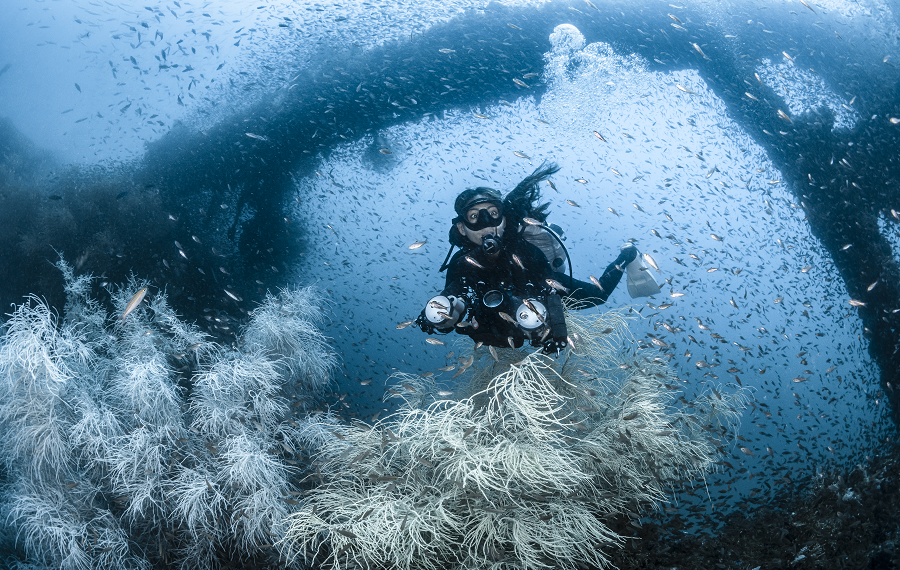
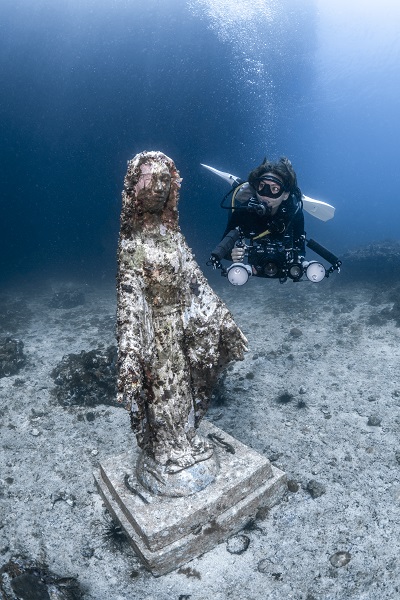
As in many sites around Malapascua, there is a flourishing population of cephalopods, and encountering a cuttlefish is almost guaranteed. With its mimicry abilities, the cuttlefish can adapt the texture and color of its skin by expanding or contracting its chromatophores. The final touch of this camouflage involves deploying its tentacles to imitate the shapes of surrounding objects.D’a catheédral à an underwater pinnacleOn the west coast of Gato, mid-way, is a cove named Cathedral, so called, in part, for its impressive size, in part due to the marking resembling the Virgin Mary, located on the vertical rock face. Nearby, underwater, a real statue of the Virgin Mary was deliberately placed to discourage destructive fishing practices. Making a stop in this impressive environment at Cathedral allows encounters with schools of sardines and juvenile batfish.
In the local dialect, Bogtong Bato means “the lone rock.” It is a submarine pinnacle located right at the northern tip of Malapascua. The seamount is relatively small and can be subjected to strong currents. Hence, it’s essential to descend quickly to avoid missing the site. Once you reach the seamount, a festival of colors and a feast of macro life await. Every inch of the rocky pinnacle is covered in coral, mainly soft corals, creating a tapestry of beautiful pinks, purples, and oranges.
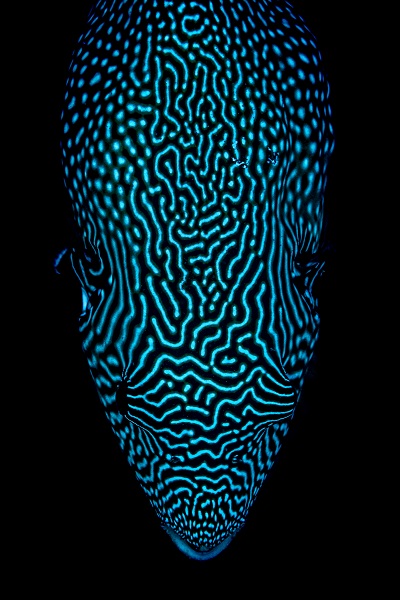
In the sand at 30 meters, some gorgonians where, with the help of an experienced local guide, you might spot pygmy seahorses (Hippocampus bargibanti). This name comes from scientist George Bargibant, who discovered them accidentally in 1969. These miniature seahorses measure just about 2 cm tall and manage to look cute despite their distended bellies and bodies that appear covered in reddish warts.Essential tourists à shark protectionThresher sharks have transformed the isolated island of Malapascua into a must-visit destination for diving tourists. On their part, the island’s inhabitants also wish to preserve these sharks. Monad Shoal is subject to strict guidelines for visiting divers, which provide protection guarantees for the sharks. Flash photography is prohibited at Monad Shoal, which obviously makes things very difficult in the depth and penumbra of dawn for underwater photographers. However, as a tourist aware of and responsible for their own impact, it’s crucial to respect local guidelines. Usually, grants obtained from the marine park cover the costs of maintaining a daily surveillance team, aiming to protect the site from illegal activities.
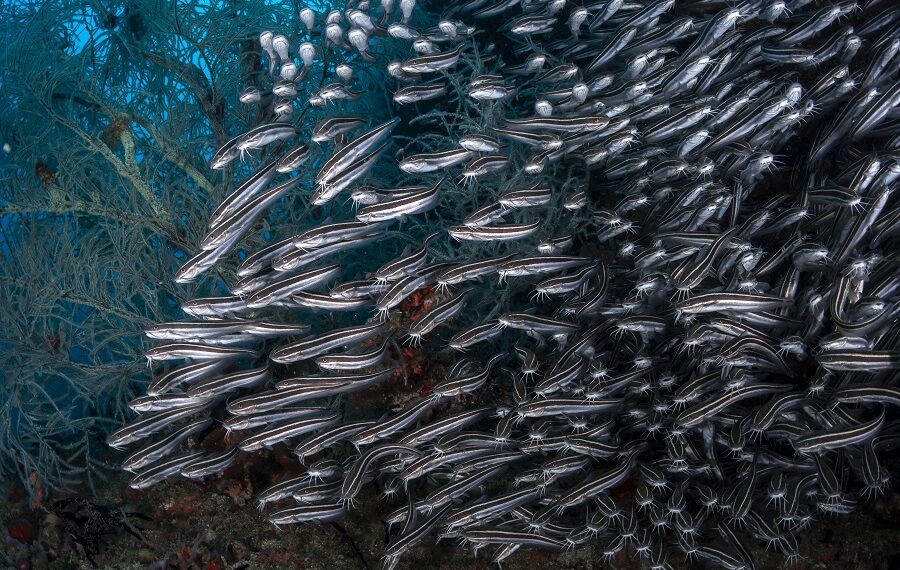
However, with tourism activity decimated by the COVID health crisis, funds allocated for these ecological marine guards have been exhausted, and the Malapascua population is having a hard time even getting enough to eat properly. Apart from tourism, there are no real prospects of alternative employment, and the situation creates tremendous hardship for this community. The sooner divers can return to this site, the better it will be for the locals. And the first tourists returning to Malapascua will enjoy the brief luxury of encountering very few divers underwater. My friends, currently on the island, report that the thresher sharks are still there in abundance!
Henley Spiers