A well-anchored fear
If there’s one topic that is truly frightening, it’s invasive species. You surely remember that fluorescent green algae inadvertently released by the Monaco museum, the Caulerpa taxifolia. It was supposed to destroy our Posidonia meadows and even make us sick. Its toxins were to end up in our fish and crustaceans. Today, fortunately, no one talks about this invasive anymore. It seems to have found a certain balance in the few areas where it remains. Perhaps one day it will resume its conquest of the seabed.
Invasive species that became economic resources
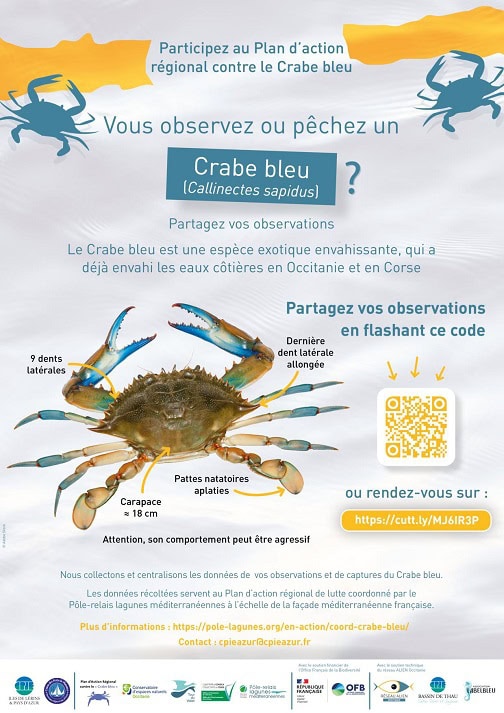
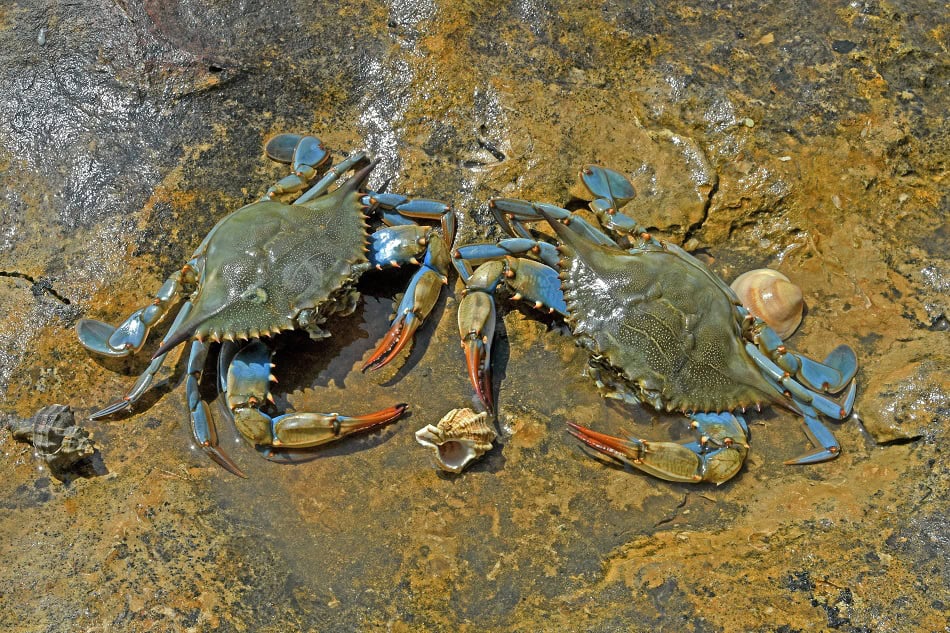
More recently, we moved from green to blue, with a famous crab. It is famous because its flesh is delicious, but also because it causes a lot of damage to fishermen’s nets. Being very voracious, it attacks and eats everything it finds under its claw. The Tunisians, who were among the first to face it, nicknamed it « daesh » due to its invasive and dangerous nature. Then one day, they turned it into an economic resource by adopting it in their kitchens.
Sometimes exaggerated alarmism
Even more recently, last summer, some media ran headlines about the danger posed by barracudas, an invasive species from the Red Sea, for swimmers. Of course, the barracuda attacks no swimmer or scuba diver. It has been peacefully settled on our coasts for many years, much to the delight of some fishermen and everyone who goes below the water’s surface.
The impact of the Red Sea on Mediterranean biodiversity
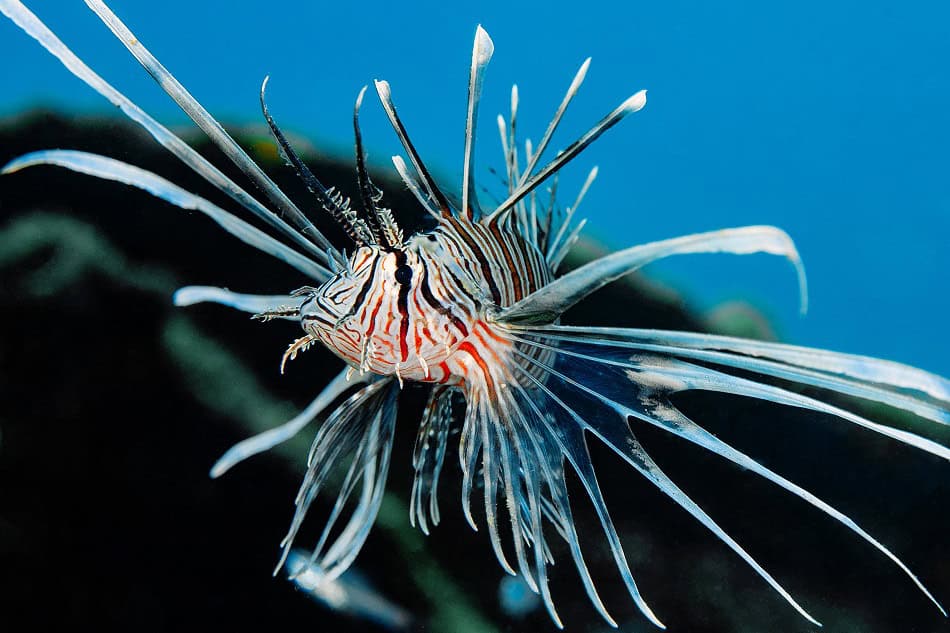
The Red Sea is the main cause of these invasions. When the rabbitfish arrives, there are claims that it will also destroy all our meadows. To this day, it has not done so and perhaps it never will. The lionfish will devour everything? Possible. But it is not yet present on our coast. Perhaps it will never settle here. The latest report from the Barcelona convention (QSR 2025) mentions 0.6% of marine species present in the Mediterranean originating from the Red Sea. Considering this percentage, as of today, it is difficult to speak of a « great replacement. »
Perhaps later, with hindsight and a little more reflection, we will appreciate that some Red Sea species have taken refuge in the Mediterranean, fleeing their original territory threatened by the effects of climate change. Isn’t the Mediterranean a land of welcome?
A nature in constant evolution
Beyond this question, which undoubtedly falls more within the realm of philosophy than ecology, the question of our perception of these species arises. Often, unfortunately, we can only notice their presence. If ever these species are harmful, it is already too late. We are left to observe the damage. And sometimes, they become « our own. »
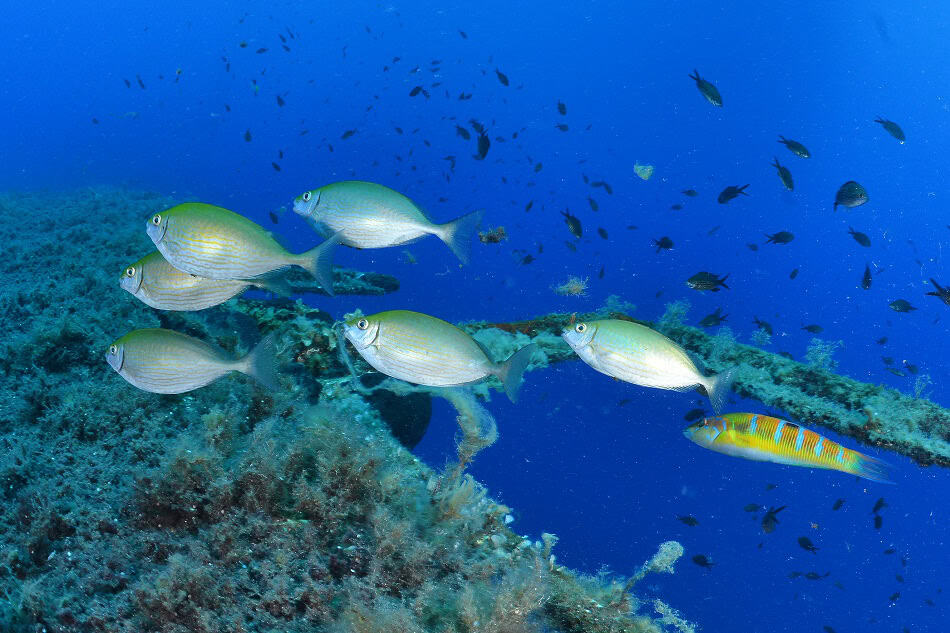
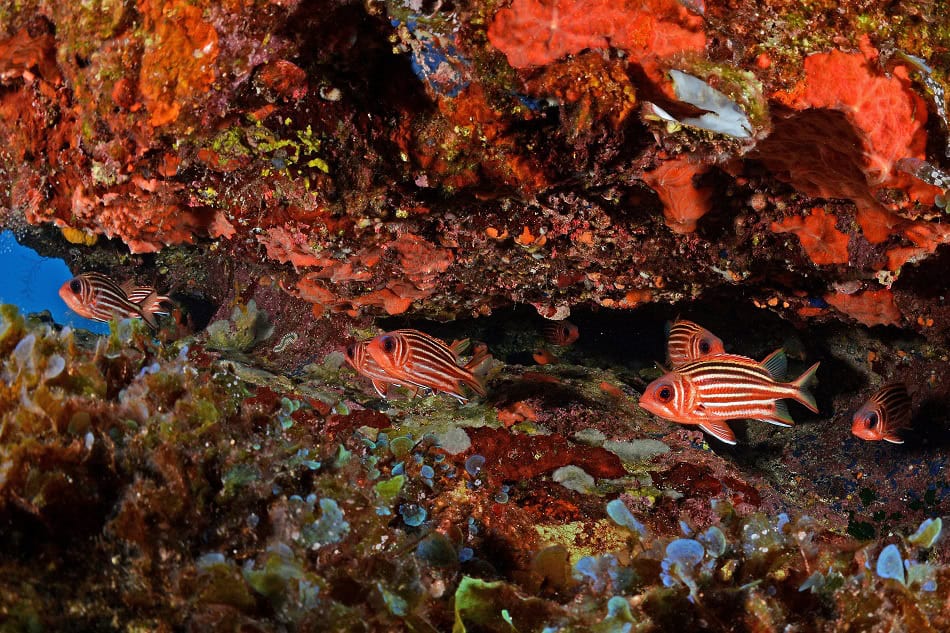
No one cries out about the presence of the peacock wrasse, which is the tropical cousin of our common wrasse, or about the presence of the brown alga Asparagopsis armata. The Thau lagoon, whose vegetation is made up of more than 90% foreign and often Japanese species, is a marine protected area. This means we find ecological interest in a natural environment that overwhelmingly shelters foreign, non-native species to our Mediterranean.
Should we rethink nature conservation?
Ultimately, is this fixed vision we have through the notion of nature conservation not a skewed view of nature, which is evolving and adapting every day, with or without our influence?
While we have the moral obligation not to disturb nature or, at least, to avoid disturbing it as much as possible, we must also acknowledge that our knowledge of the impacts of invasive species remains limited, as does our capacity to act.
Pierre Boissery
Read the Barcelona convention report – QSR 2025