


From the small volcanic island of Reunion to the deserted beaches of the Scattered Islands or the vast Malagasy coasts, habitats and contexts greatly differ, thus influencing the evolution of marine turtle populations in the region. Depending on the species, the conservation status and challenges vary significantly, requiring vigilance and adapted actions from committed stakeholders.
Kelonia: 15 years of commitment to marine turtles
For over fifteen years, the Kelonia observatory, based in Reunion, has been working for the preservation of marine turtles, not only on a local scale but also throughout the southwest region of the Indian Ocean. Despite the lack of exhaustive data, it appears that two species, the green turtle (Chelonia mydas) and the hawksbill turtle (Eretmochelys imbricata), seem to see their population of breeding females gradually increase. Conversely, the loggerhead turtle (Caretta caretta) and the same hawksbill turtle would suffer a decline in other sites. As for the olive ridley turtle (Lepidochelys olivacea), the information is still too sparse to provide a real assessment.
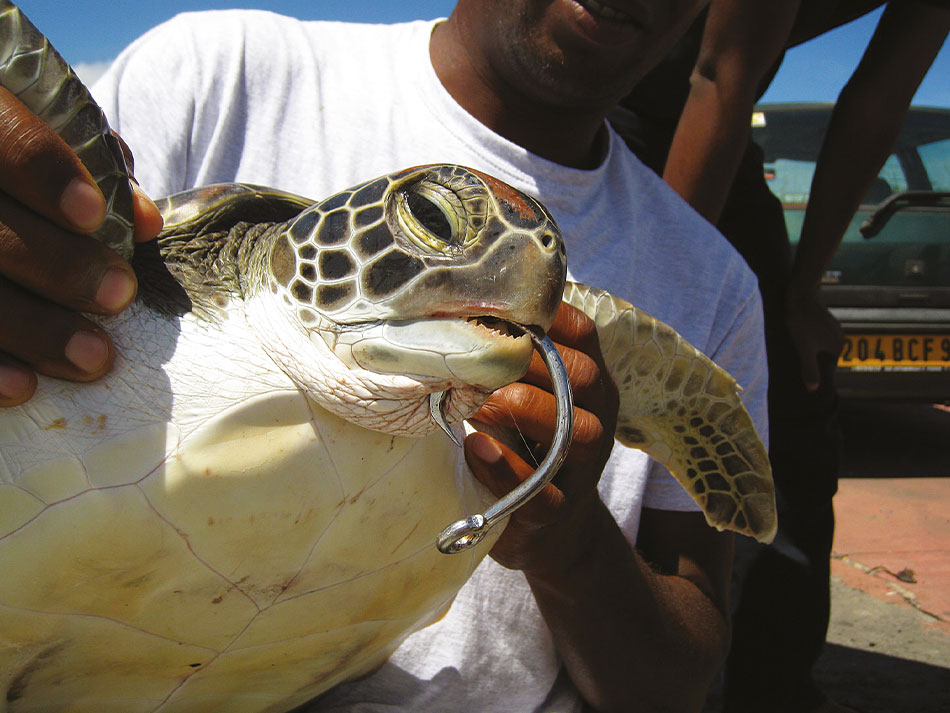
Faced with these challenges, Kelonia continues its research initiatives to better understand the population dynamics of marine turtles in the southwest Indian Ocean. But their mission does not stop there: public awareness is inseparable from research. As Claire Jean, head of research at Kelonia, explains: ‘Each program leads to a concrete action aimed at the general public, in the form of an exhibition, for instance.’ This dual approach also includes the assistance and care provided to injured or weakened turtles hosted at the center.
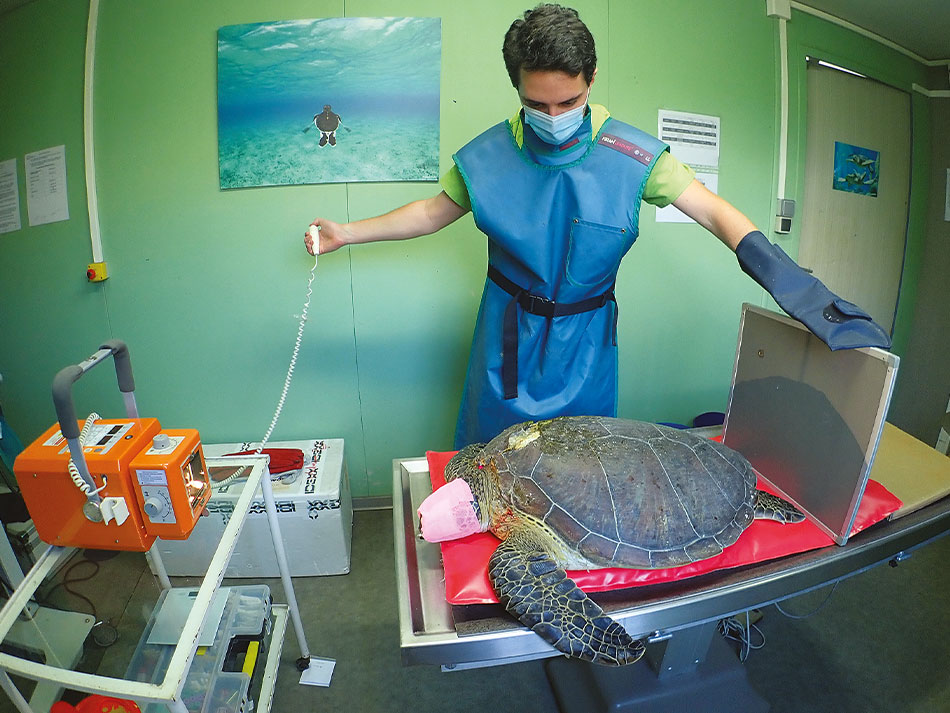
Today, Kelonia hosts about 35 turtles each year, mainly loggerheads. This number is increasing due to the growing involvement of fishermen in the collection of these animals in distress. A specific partnership has been established with Reunionese longline shipowners, at their request, to reduce accidental captures.
Did you enjoy this excerpt?
Read the full article.
READING TIME ≈ 06 min
Dive into the heart of PLONGEZ! Magazine
To enjoy this article and its exclusive content, a small participation is required.