


Text and photos: Erwan L’HER for the Vräk expedition
A Unique Underwater Treasure in the Baltic
Since the dawn of navigation, the Baltic Sea has been at the heart of intense trade exchanges and bustling maritime activities. Surrounded by multiple nations, it serves as a hub for the trade of raw materials and has witnessed numerous historical conflicts, leaving behind a multitude of remarkably well-preserved shipwrecks.
The Exceptional Preservation Conditions of the Baltic
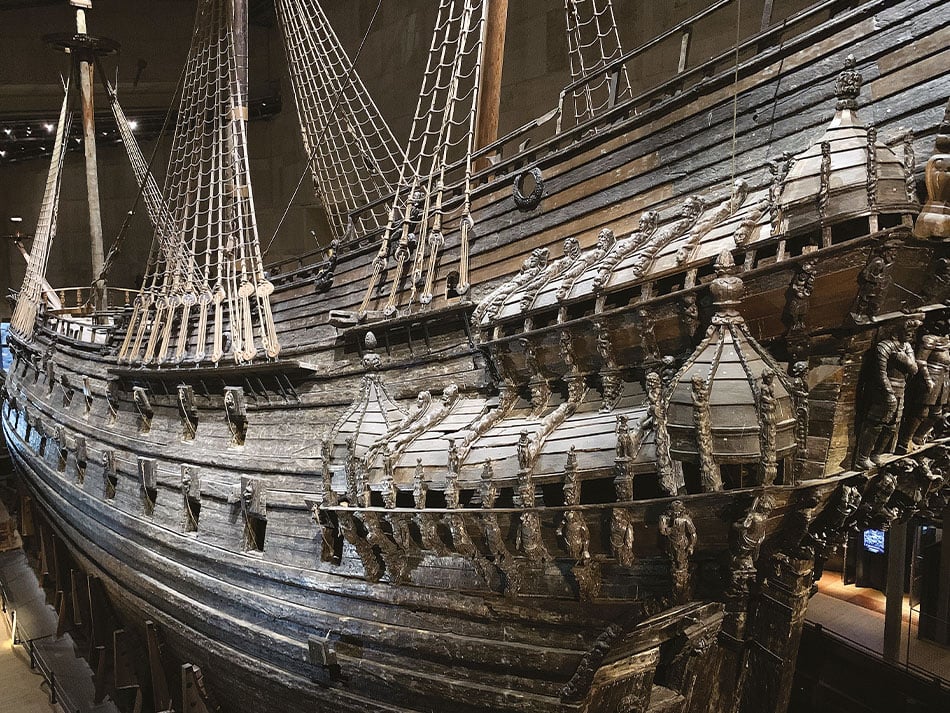
The Baltic’s reputation for preserving shipwrecks is due to the unique properties of its waters: low salinity (about 5 g/l), low temperatures (generally between 4 and 6 °C at depth), and near-constant darkness. These factors significantly hinder the proliferation of wood-eating marine organisms and other species likely to deteriorate wood and materials. As Emmy Ahlen of Vrakdykarpensionartet explains: « What is thrown into the Baltic Sea remains in the Baltic Sea until it is found… ». On these depths, 17th-century wooden ships sit alongside steamships, cargo ships, and warships from both World Wars.
The playground offered to Swedish underwater archaeologists is immense! Among the thousands of identified wrecks, we distinguish the famous Vasa, sunk upon its launch in 1628, discovered in 1959 by Anders Franzén, refloated in 1961, and now a flagship of the dedicated museum (open to the public since 1988). Its sister ships, Kronan, sunk during the Battle of Öland in 1676 (discovered in 1980 by the same Anders Franzén), and the Äpplet (recently rediscovered), are also among these treasures, as are many shipwrecks yet to be discovered.
Vräk Expedition 2022: At the Crossroads of Science and Adventure
The 2022 edition of the Vräk Expedition, supported by the UBO-Brest Foundation, DAN US, as well as SF Tech Drysuits, ReVo, Mares, Apeks, and Easy Dive, set itself an ambitious dual objective:
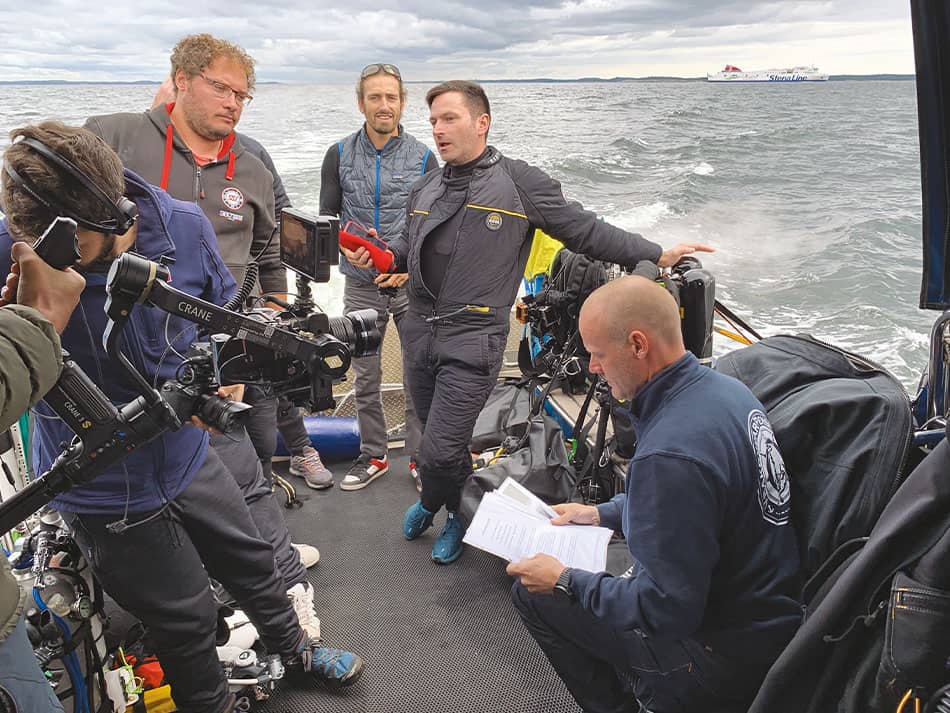
- Produce professional images for a 52-minute TV documentary dedicated to the 17th-century wrecks in the Baltic.
- Conduct scientific research on the impact of repeated closed-circuit rebreather dives on the cardiovascular and pulmonary functions of professional divers.
The audiovisual production was provided by Seven 52 (Laurent Tolleron), the technical diving by Tek Diving (spin-off from the UBO, specialist in innovative decompression algorithms), and the medical research by the teams of LATIM (Pr E. L’Her, INSERM UMR 1101, UBO Brest), ORPHY (Pr F. Guerrero, EA 4324) and ULB (Pr C. Balestra, ULB Brussels).
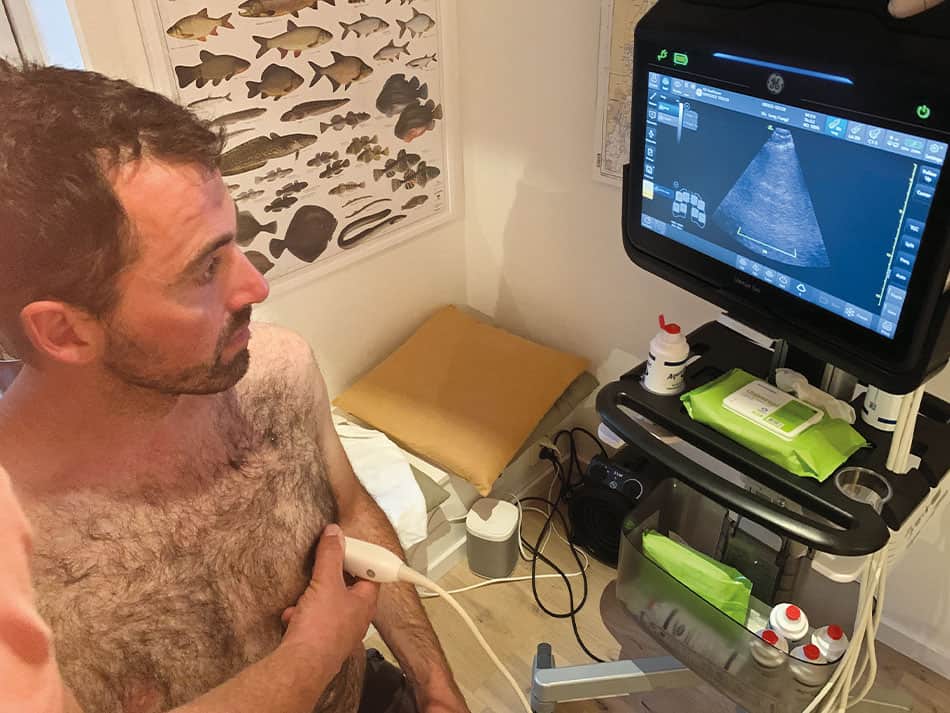
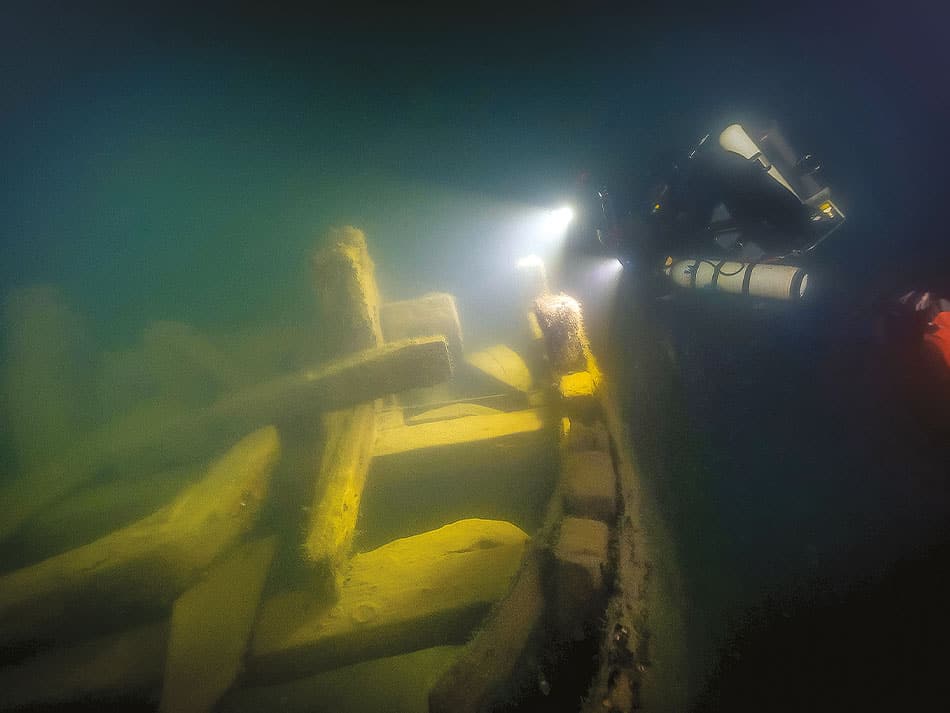
Each return to base was an opportunity to enrich the understanding of diver physiology through numerous measurements. Over 15 days, more than 24 dives from Dalarö allowed exploration of major sites: Kostervräket, Ana-Maria, Jutholmen, Riksapplet, Gröne Jägaren, Ingrid Horn, Paula Faulbaum, and the jewel of the Baltic: Bödekull, an armed cargo ship from 1678, discovered in 2003 at a depth of 29 m, its two masts reaching only 12 m below the surface.
Discover the Majestic Wrecks of the Stockholm Archipelago
The KosterVräket – Concordia: An 18th-century Cargo Ship Frozen in Time
Did you enjoy this excerpt?
Read the full article.
READING TIME ≈ 7 min
Dive into the heart of PLONGEZ! Magazine
To enjoy this article and its exclusive content, a modest contribution is required.