


Protégéected for over 30 years, the Tubbataha atolls, far away in the middle of the Sulu Sea, have become a sanctuary: a méarine reserve, classéified as a UNESCO World Heritage site and swepté by omnipreésent currents, which hosts a multitude ofè pelagic speécies and préistine coral reefs in perfect health, a té. Vérue modelè of conservation, the destination beénénefits from’ draconian protection and very few divers have the privilèege of enjoying this jewel.
Sulu Sea between the Philippines and Malaysia, almost 150 km east of the coast of Palawan. The sun rises, and the sky is already filled with sublime colors above an oil-smooth sea. The outline of the atolls is barely discernible, offering a ribbon of azure blue that seems to stretch over an unseen distance. You arrive here, in the middle of nowhere, after tens of hours of navigation from Puerto Princesa and its humid heat. The Tubbataha Reefs Natural Park opens its doors, and nothing at first glance hints at what awaits visitors. These are the only atolls in the Philippines, a true curiosity: the North atoll, measuring 16 km by 5, and the South atoll, 5 km by 3, accompanied by the Jessie Beazley reef. They are the result of extinct underwater volcanoes from the Cagayan Ridge. In the Sama language spoken in the southern Philippines, « Tubbataha » means « a long reef exposed at low tide. »
The remoteness of the nearest islands has long allowed them to be naturally protected, particularly from overfishing. The first threats arrived with the evolution of fishing boats, notably cyanide or dynamite fishing, particularly destructive to ecosystems. But the reaction was swift to protect the site, which was classified as a marine reserve in 1988. A few years later, in 1993, the Tubbataha atolls were inscribed as a UNESCO World Heritage Site. The Tubbataha Reefs Natural Park is delimited by a triangular area of 970 km², almost as large as Hong Kong.
The privilèege of’ exploring a nearly untouched worldComing to Tubbataha is earned. The journey is admittedly long, but the spots are especially limited. Diving is only permitted for 3 months, from mid-March to mid-June. Conditions are then optimal, and the sea generally looks like a motionless lake. Less than 20 boats are allowed to access these reefs. Before the pandemic, in 2019, only 3,500 divers had the pleasure of dipping their fins there. Diving here is a true privilege.
Everything is done so that divers have the least impact possible on the environment, and the rules are therefore strict. From the first evening, during the crossing from Palawan, a clear and precise briefing is given by the cruise organizers. No touching, disturbing, or collecting… The diver should be a witness, not an actor. Shouldn’t this be applied everywhere? It is also forbidden to land anywhere on the Tubbataha seabed. One accepts this without complaint and eventually becomes accustomed to it.
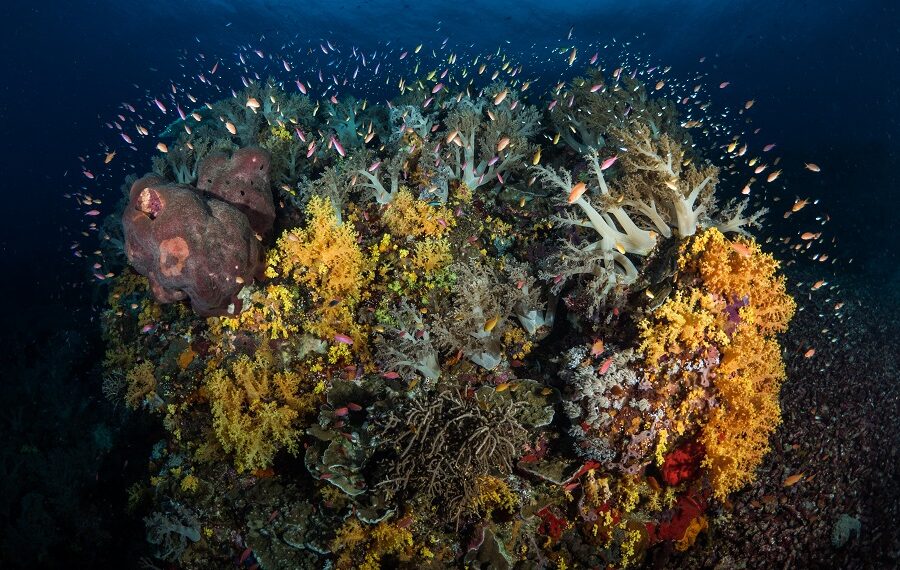
Tubbataha offers its guests the incredible advantage of observing completely pristine coral reefs with an intact balance. This is apparent from the first immersions. Completely protected, marine life flourishes without any threat. There are no less than 360 species of corals out of approximately 800 known worldwide and over 750 species of fish. The Coral Triangle in all its splendor….
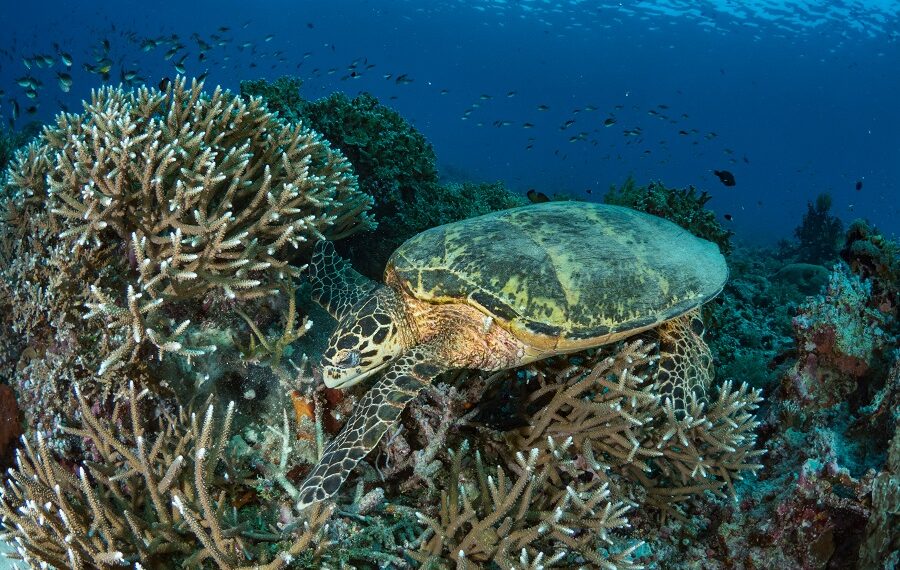
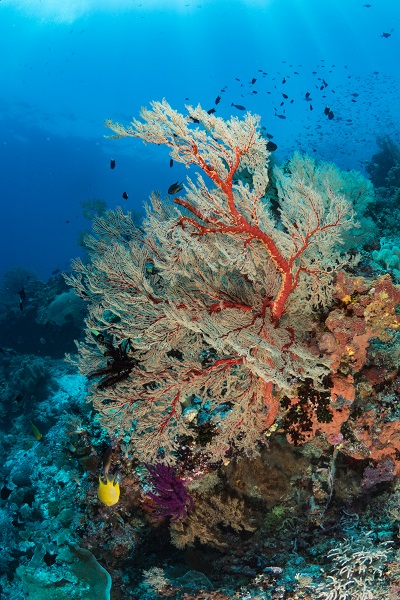
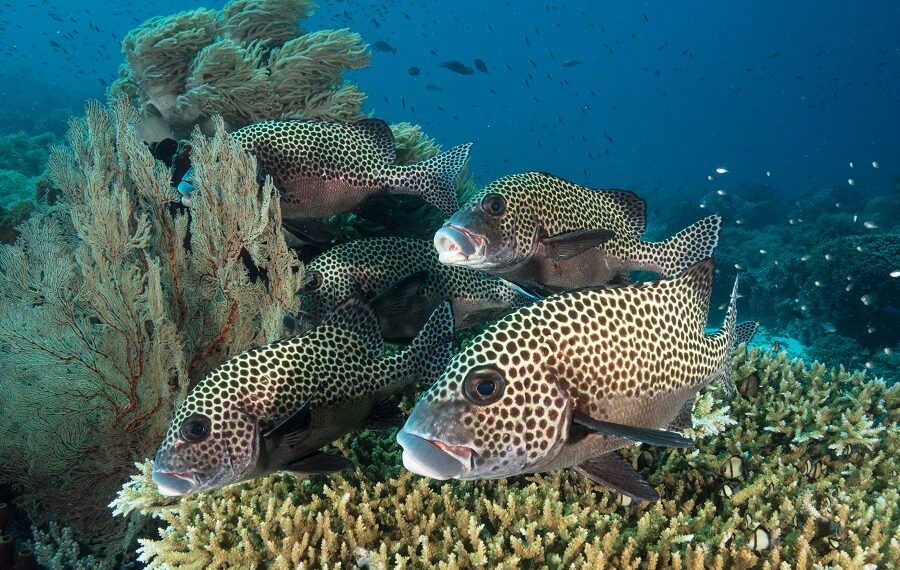
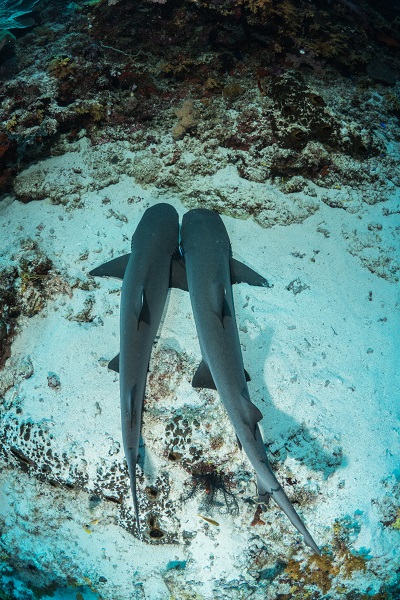
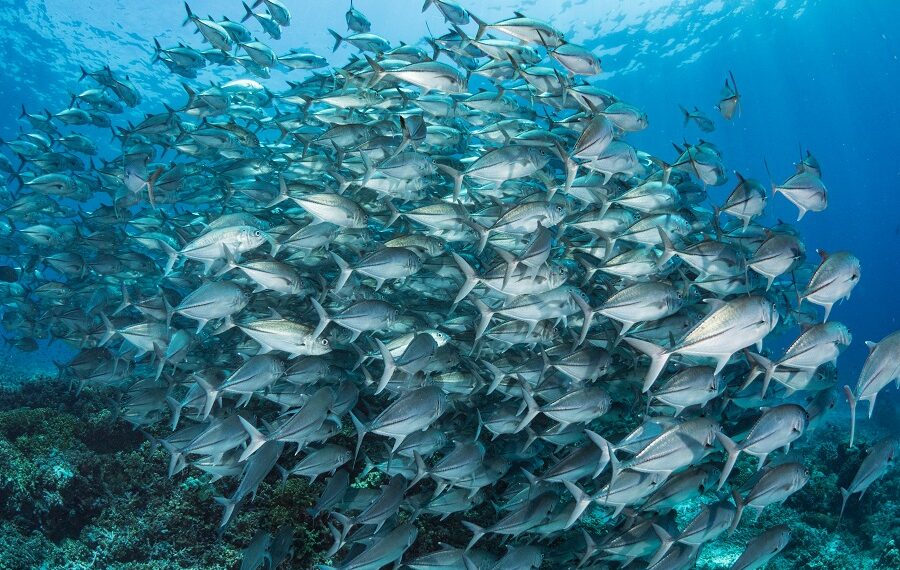
These atolls, far from everything, concentrate biodiversity. Under the surface, one doesn’t know where to look. It’s necessary to keep an eye on the reefs and the blue. There’s always something to see.The Coral Triangle in all its splendor!Underwater, the magic operates instantly… The reefs, of all beauty, bathing in warm, clear waters, show their full potential and teem with life. Most of the time, the currents are felt in Tubbataha and are sometimes very strong. They sweep the large drop-offs surrounding the atolls, first one way and then, within a few minutes, in the opposite direction. Therefore, almost all dives are drift dives, allowing a view of the entire reef and the constant animation. Among the corals and giant gorgonians, biodiversity is impressive. The fish, whether solitary or schooling, fill the space, a feast for the eyes. Squadrons of bigeye jacks (Caranx sexfasciatus) and barracudas (Sphyraena sp.) are a real spectacle. Turtles, green (Chelonia midas) or hawksbill (Eretmochelys imbricata) cross our path on every dive as they peacefully glide over the reef. The presence of a phenomenal amount of juveniles is evident. Seeing so many juvenile Napoleon wrasse (Cheilinus undulatus) as well as schools of juvenile grey reef sharks (Carcharhinus amblyrhyncos) is simply exceptional!
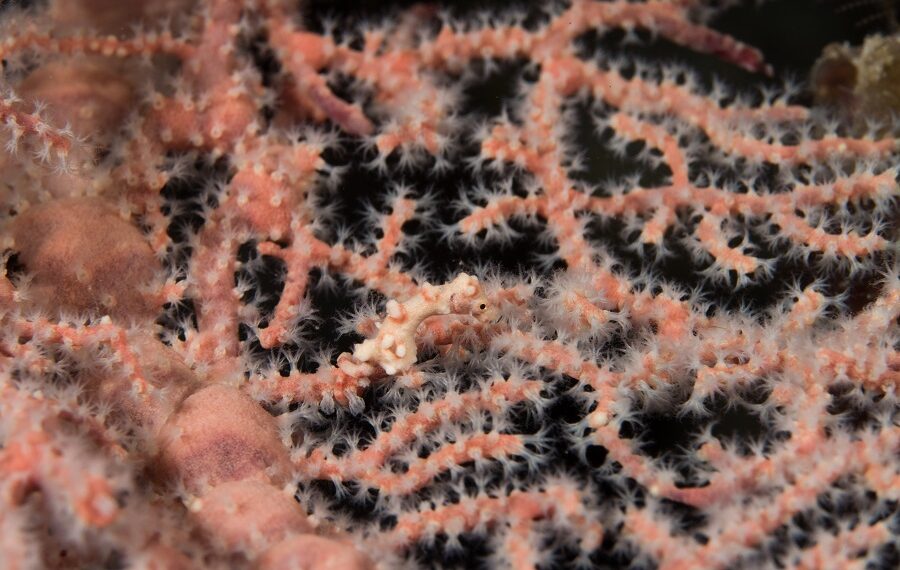
Even if the currents do not always allow stopping to look into the recesses of the reefs, macro enthusiasts will always find a beautiful collection of nudibranchs. The icing on the cake: southeast of the northern atoll, some gorgonians are the refuge of tiny pygmy seahorses!A sanctuary for sharksAt a time when sharks are threatened in all oceans, where their massacre still rages on, there are nonetheless still some protective places for them. Tubbataha is one of these places where sharks are everywhere. A few dives are enough to realize it. About a dozen species have been recorded there.
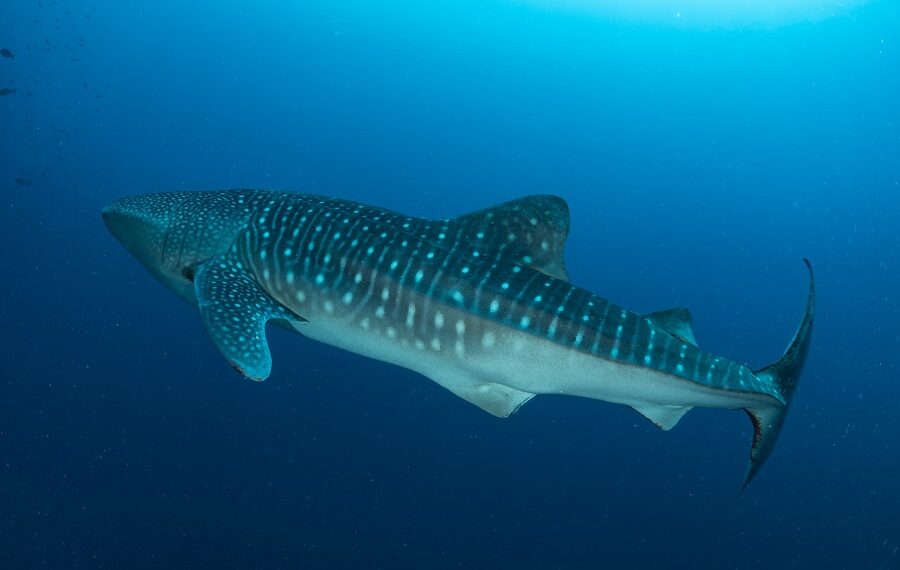
It’s exceptional! Even if it’s difficult, but not impossible, to see so many during 5 days of diving, you mainly see a large number of reef sharks (Triaenodon obesus), blacktips (Carcharhinus melanopterus), whitetips (C. albimarginatus), grey sharks (C. amblyrhynchos)… Not to mention the one that also attracts divers worldwide, the famous whale shark (Rhincodon typus) very present around the atolls. It is also common to encounter tiger sharks (Galeocerdo cuvier), thresher sharks (Alopias sp.), nurse sharks (Ginglymostoma sp., Nebrius sp.), or even hammerheads (Sphyrna sp.)! Manta rays (Mobula sp.) are also present and accompany divers along the walls.The natural park under the rangers’ watchA dozen rangers are permanently stationed on the North atoll. Their base camp is the Rangers Station located on the small sandbank south of the larger atoll. The team, composed of military personnel, coastguards, municipal employees from Cagayancillo, Tubbataha management office staff, and divers, is led by Angelique M. Songco, affectionately called « Mama Rangers. » Their role is to simply watch over the integrity of Tubbataha’s wealth by monitoring and taking action against fishermen and poachers venturing into the park. They also conduct scientific studies and perform cleanups and eradications of invasive species (like the crown-of-thorns Acanthaster planci starfish) which, when they proliferate, can pose a real threat to the corals.
Going on a diving cruise to the Tubbataha reefs is an exceptional adventure. It will leave a lifelong impression on every diver. A chance to witness a real conservation success led by the Tubbataha management office and to observe marine ecosystems the way we wish they could be everywhere. The next visitors will have an additional privilege… Because the pandemic curtailed two tourist seasons, and in spring 2022, the waters of Tubbataha won’t have been dived in 3 years, except for the few lucky ones who came at the very start of the 2020 season before border closures.
Anthony Leydet