


Crocodiles are among the animals of tales, often monsters equipped with a multitude of teeth in an elongated V-shaped snout (unlike alligators and true caimans) that attack any bystander at the edge of a lake. Some crocodiles also live in the sea… but with a bit of caution, encountering them can be appreciated.
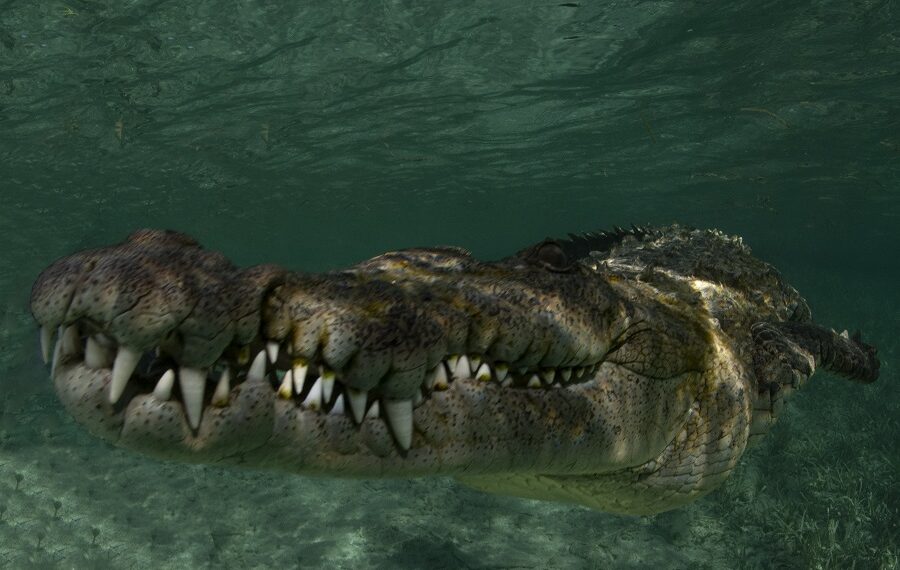
1- A matter of size
Les C. acutus adults measure between 3 and 4 m, with one-third being a powerful tail, weighing up to 350 kg, depending on their age or sex… Because size determines fertility: females become mature once they reach 2.8 m at 8-12 years old, and live up to 80 or even 100 years.
2- Scaly armor
At first glance, rows of bony scales can be seen on the back and tail. These Americans have interlocking scales protecting their entire bodies. They are green-gray, with a whitish-yellow belly on which they crawl when on land. However, they can also stand on their 4 short webbed legs and run at nearly 16 km/h.
3- Estuarine
This crocodile is not called ‘American’ for nothing: it can be found from the mangroves and brackish waters of river mouths in southern Florida, all along the coasts of Central America and even to the north of South America, to the hypersaline lakes and marshes of the Caribbean, even swimming from island to island.
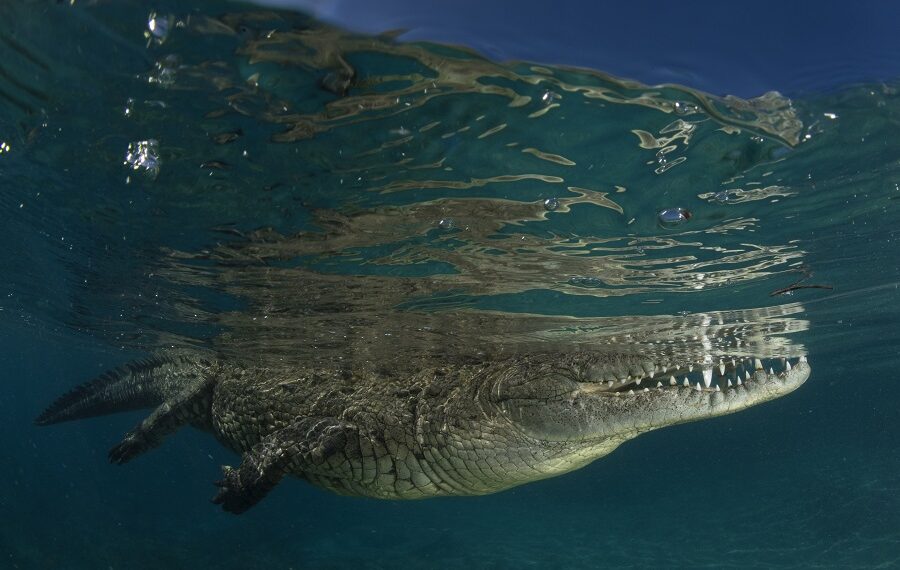
4- Saline confusion?
Indeed, C. acutus it can live in fresh or salt water, and is thus equipped with glands allowing it to secrete salt! Not via tears, like marine turtles, but through large pores located on the (non-keratinized) tongue. The large C. porosus also has them, but it lives in the sea in Asia, with algae on its large body giving it a green color.
5- 4th lower tooth
They should not be confused with alligators, often smaller and equipped with cavities in the upper jaw that do not reveal the lower teeth. Whereas C. acutus have the 4th lower tooth pointing upwards when the mouth is closed.
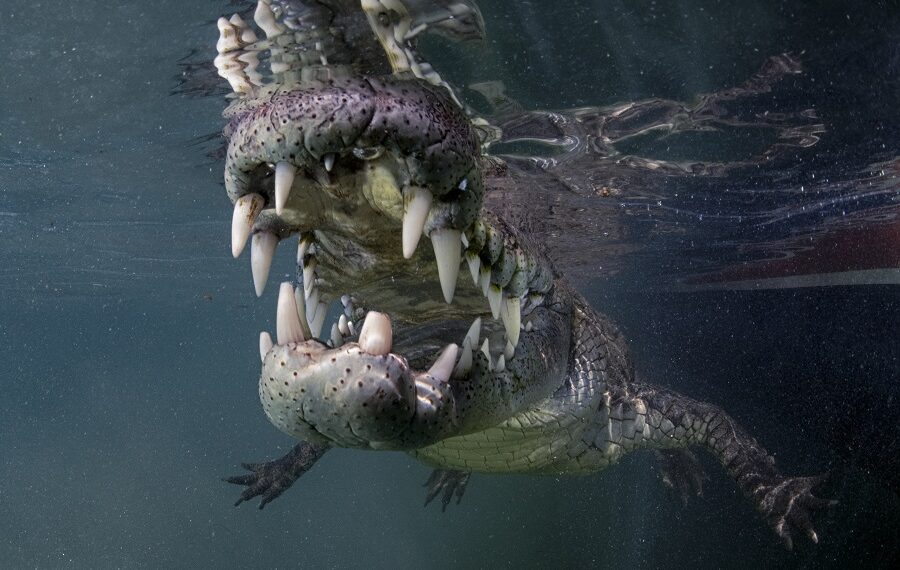
6- Sun
Active at night, it enjoys basking in the sun during the day with its mouth open. This regulates growth and digestion by controlling internal temperature. Alligators can live in water at 7°C in rivers, while these American crocodiles would drown from hypothermia!
7- Prey
Almost anything within reach, on land or under water, can be seized, from insects and their aquatic larvae to fish, birds, frogs, or even cows and other large mammals. Lying in wait, the crocodile surprises and drowns its victims; it can also pursue them in the water by quickly undulating (30 km/h!).
8- Relational
These crocodiles have no known natural predators… They even hunt lemon sharks (the latter thus avoid waters where they live)! And that’s not all: caimans and young alligators are also on the menu.
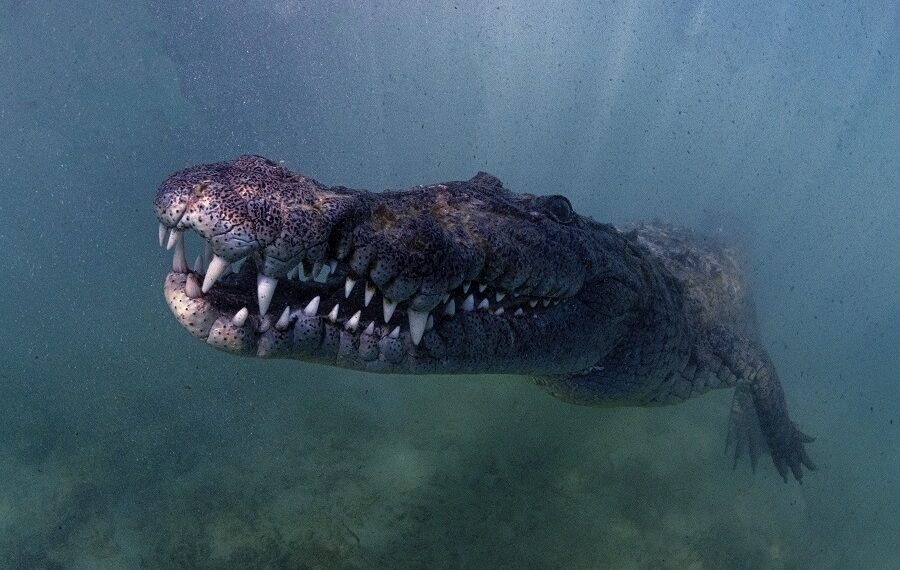
9- They talk!
If you listen closely, chuckles, growls, and other vocalizations allow them to communicate with each other. In winter, males emit very low sounds to attract females, but it is they who take the initiative by setting up their nests, in which they will lay 50 to 70 eggs that they will fiercely guard.
10- In the water
These crocodiles have ears that are very sensitive to the slightest vibrations, including aquatic infrasounds, guiding their attacks. When diving, these crocodiles can compartmentalize everything: closing their nostrils, ears, and eyes (triple eyelid!) but also separating nose/mouth (secondary palate) and breathing/digestion (muscular membrane).
Jérémy Delille