


A Preserved Aquatic Reserve
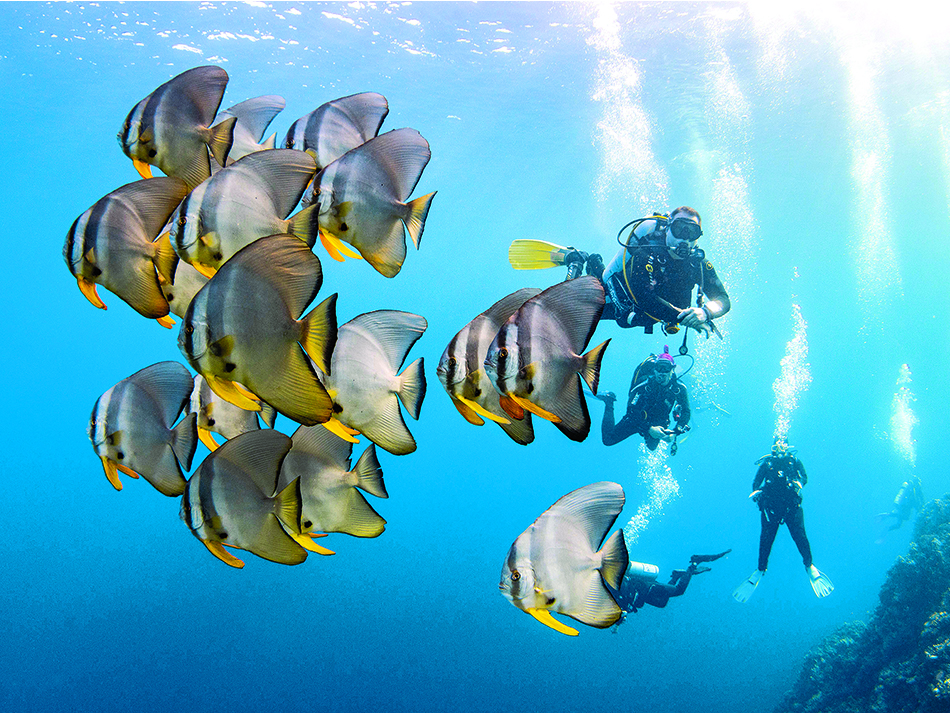
North of the Farasan archipelago, the bank that bears its name stands out for the beauty of its almost untouched reefs and its dizzying drop-offs. It is a true kingdom for diving enthusiasts, where hammerhead sharks, silky sharks, jacks, and barracudas mingle, not to mention the multitude of turtles and the colorful fauna of the coral gardens. The absence of boats on the horizon reinforces the impression of total escape.
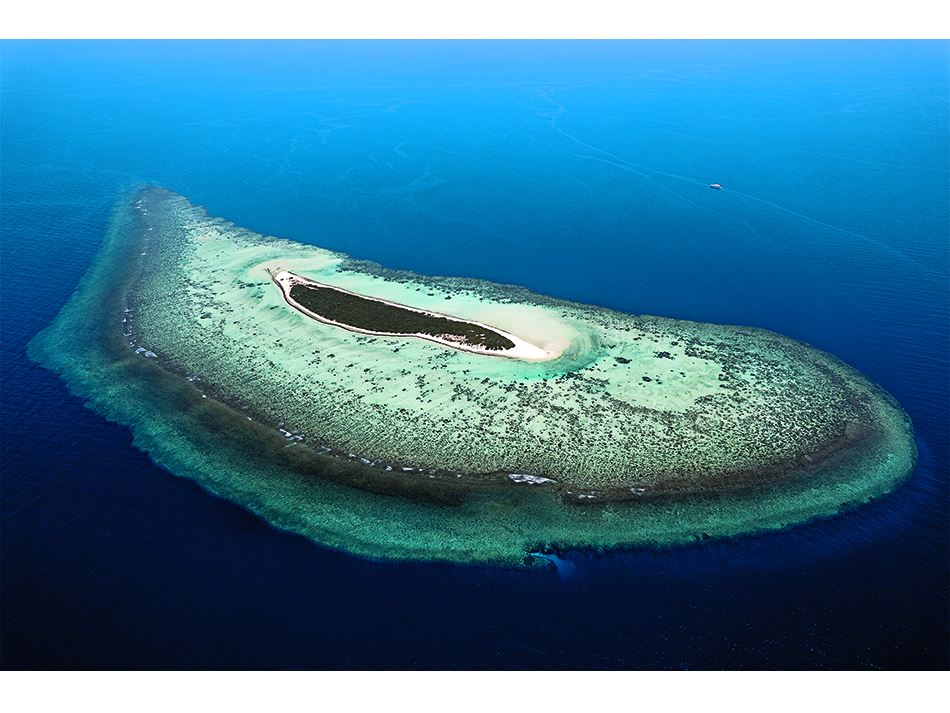
Saudi Arabia has long been an exclusive diving destination for expatriates and a few lucky ones, mainly due to the restricted access to the Farasan Bank, considered a strategic military zone. However, by the end of this year, opportunities for cruises in this still under-explored region are starting to surface. Jacques-Yves Cousteau, in his book The Living Sea (1963), had already highlighted the richness of marine life in Farasan, describing it as a « fascinating area » to explore. More than sixty years later, this place remains just as captivating.
The Archipelago and its Marine Environments
The Farasan archipelago stretches from the south of Jeddah to the coast of Yemen, covering 45 kilometers wide and 560 kilometers along the Red Sea. The continental shelf, with an average depth of about 40 meters, plunges to 600 meters at its outer edge. Cruises focus on the Farasan Bank, which consists of small islands and reefs, most barely emerging from the water. This area is divided into two sections: the north with the islands of Dohra, Jadir, and Malathu, as well as the reefs of Gorgonia, Bandu, and Long Reef. The south, about 25 nautical miles away, includes iconic dive sites such as Sha’ab Ammar, a large horseshoe-shaped reef, the islets of Danak and Jabbara, and the coral atolls of Mudarr, Fantasy, and Choppy, with the Eagle islet at the far south.
Did you enjoy this excerpt?
Read the full article.
READING TIME ≈ 6 min
Dive into the heart of MAGAZINE PLONGEZ!
To enjoy this article and its exclusive content, a modest contribution is required.