


With its double coral barrier, the lagoon of Mayotte is the largest in the western part of the Indian Ocean and among the largest in the world bordering a volcanic island. The island, relatively spared by the epidemic and the new Omicron variant, proves to be a prime destination for your next diving trip!
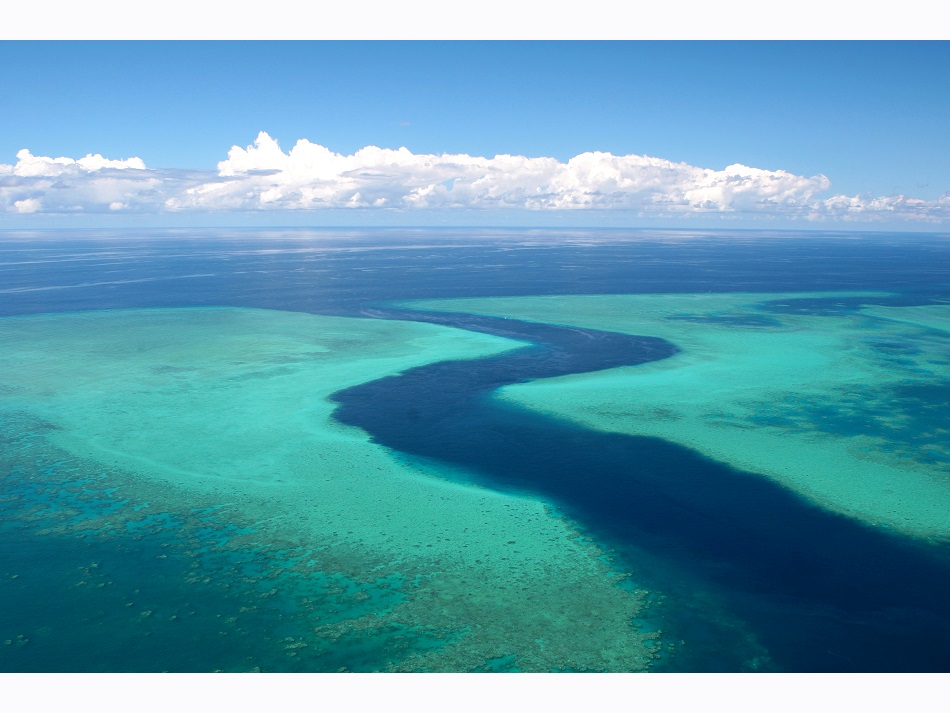
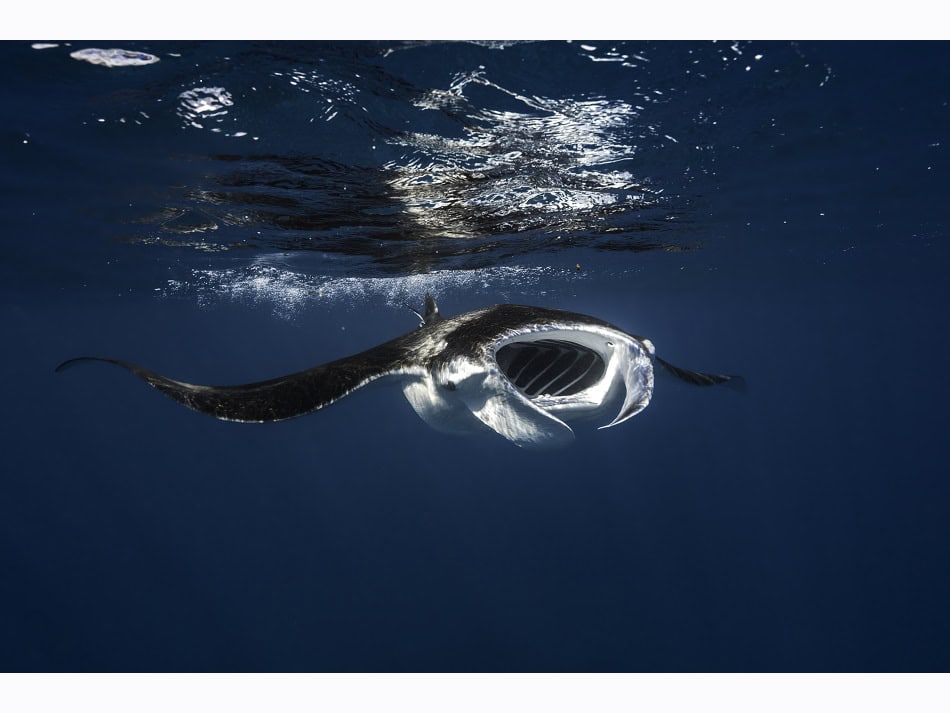
The lagoon is characterized by a wide diversity of habitats (coral reefs, mangroves, seagrass beds, remote reef banks) with a delicate balance and home to iconic species that all divers dream of: turtles, dolphins, manta rays, whales, dugongs… Not to mention some pleasant surprises for the luckiest ones! Numerous underwater seagrass beds nourish turtles and dugongs, remote reef banks attract sharks and other pelagics… Not to mention the presence of numerous marine mammals (including 18 species of dolphins) representing a quarter of global diversity! Superlatives abound to describe one of the largest and deepest lagoons in the world, which also stands out for its double barrier reef, as well as its exceptional biodiversity…
Indeed, to fully understand the specificities of diving in Mayotte, it is important to keep in mind the originality of the island’s geological structure. Because the double coral barrier, consisting of the outer reef—which marks the boundary of the lagoon—and the new fringing reef close to the island, is doubled by another rare phenomenon: the presence of an internal barrier in the lagoon, between the fringing reef and the outer barrier, to the south of the island; a phenomenon found elsewhere in the world only in New Caledonia and the Fiji Islands.
Fringing reefs, barrier and coral heads
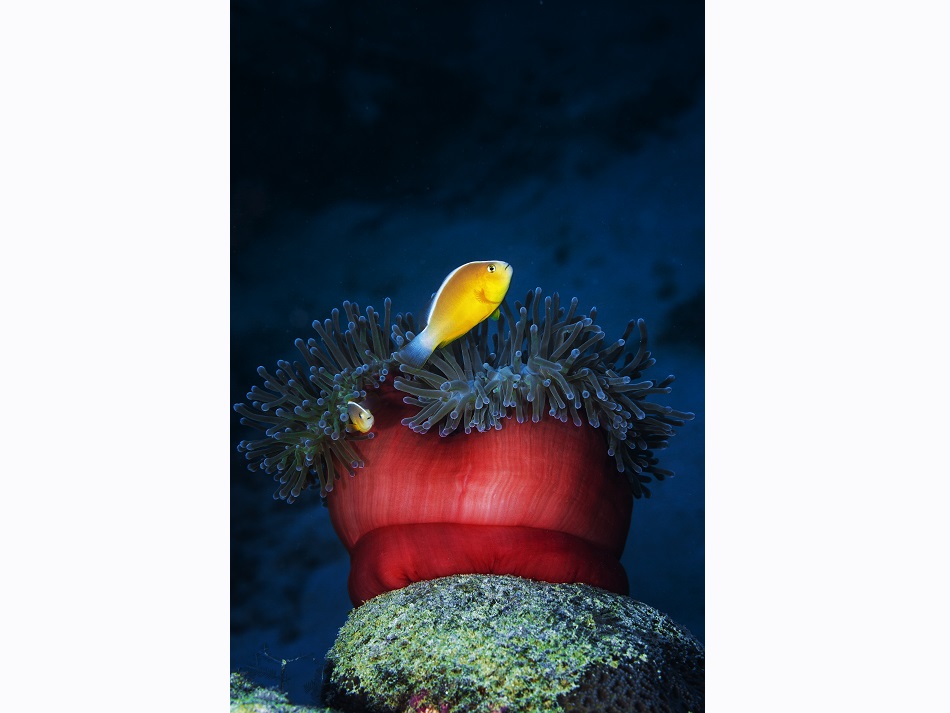
This very particular geology of the ‘Seahorse’ island—another nickname for Mayotte due to its shape—offers a beautiful variety of dives : on the fringing reef, within fin reach from any beach; on the great barrier and more specifically in the passes; on the large coral heads of the internal barrier. And not to mention the deep dives that take place, from the second drop-off to the base of the third drop-off, at 120 meters deep! Depending on the topology of the sites, the spectacle is completely different: pelagic in the passes, with trevallies, large groupers, sharks and a very varied small fauna in the lagoon, with many surgeons, butterflies, moray eels, shrimp, leaf fish, ghosts, pegasus…
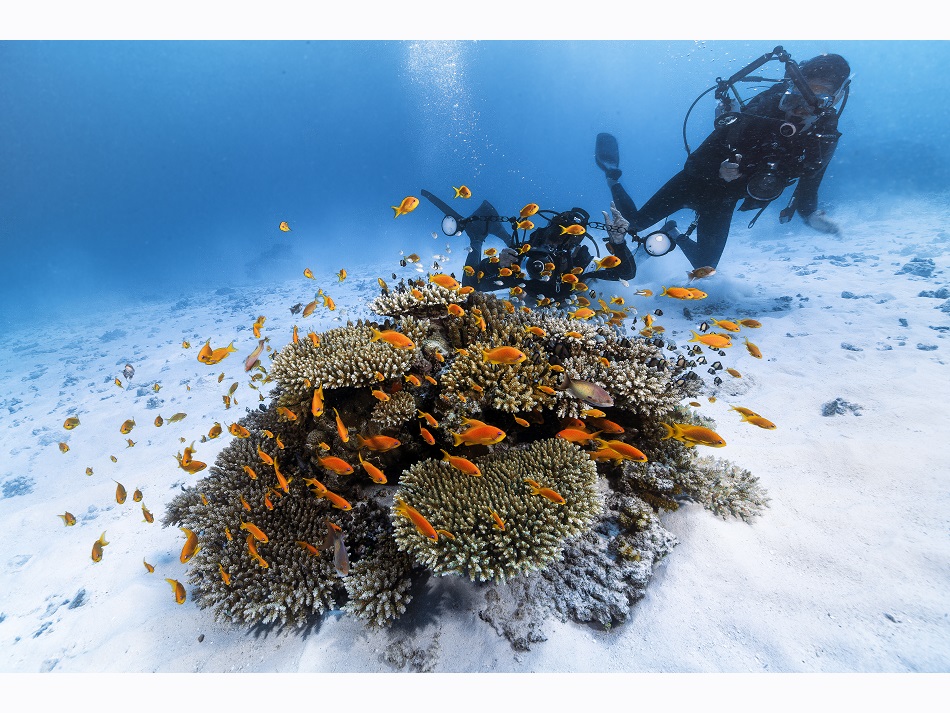
It’s a very complete island. On one hand, you can enjoy the healthy coral reef with a small diverse fauna, crustaceans, nudibranchs… And on other sites, you can encounter large ones. The exploration possibilities are endless, with the opportunity to dive in places where no one has yet made bubbles. Protected by the barrier and with a depth of up to 100 meters, the lagoon can also attract freedivers.
Seasonality sets the pace of lagoon life
Besides the diversity of diving types, Mayotte stands out by the location of the sites, spread all around the island. The coast can thus be divided into three sectors: the east with the emblematic S-Pass, the Aviators’ Drop-off, the Bandrele Pass, the chimney, the south to see big on the Bateaux, Boueni, and Sada Passes—straight passes with currents where you drift dive—and the north-northwest with many dives inside the lagoon on important reefs teeming with life, like the Choizil Islets and the Boa Bank. In the far north, experienced divers can also enjoy grand spectacle dives on the Iris Bank, east of the Mtsamboro Islet, where the barrier has collapsed and the drop-off reaches a depth of 100 meters less than 30 meters from the reef… It’s the realm of pelagics, but beware, the currents can be very strong! Be sure to be accompanied by centers that know the sites perfectly!
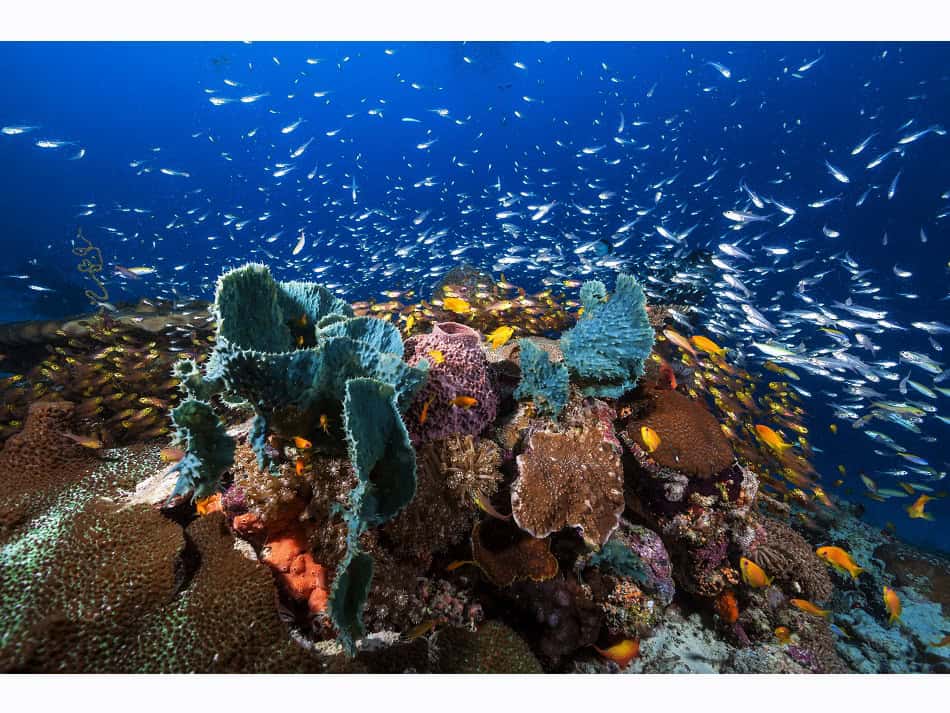
What also characterizes diving in Mayotte is the significant seasonality that sets the rhythm of certain species’ presence. To see humpback whales, one should favor the months from July to October, during which Megaptera novaeangliae comes to give birth in the warm waters of the lagoon. Want to observe hammerhead sharks? They rise to accessible depths when the water is cooler in the southern winter, (25°C compared to 30°C from December to April). For those who only swear by the charm of manta rays, although present all year round in Mayotte, it’s from February to June that they can be more easily spotted in the lagoon where they come to feed on plankton carried by the marine currents.
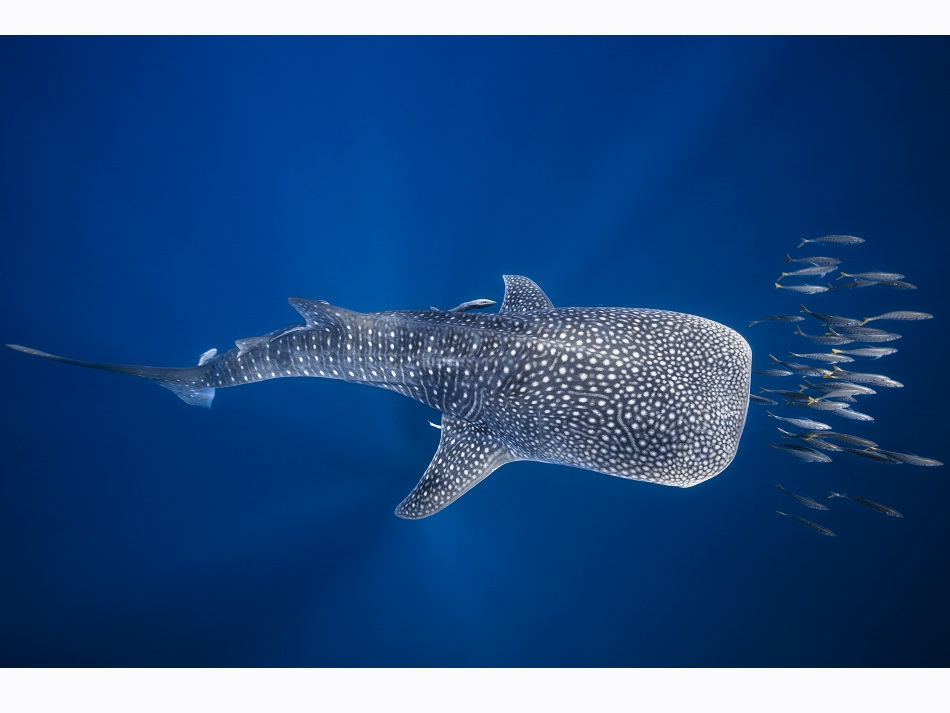
To organize your stay, you must juggle between the best observation period of the seabeds of Mayotte, between April and November (dry season), with optimal visibility from July to October, and your own preferences in terms of iconic species to observe, knowing however that dolphins and turtles reside year-round in the lagoon.
A marine natural park of 68,000 km2
Reconciling the preservation of the marine environment and the sustainable development of activities is one of the major challenges of the Mayotte Marine Natural Park, the first overseas natural park created in 2010. With 2300 known marine species, including 800 species of fish, 300 species of corals, 7.3 km2 of mangroves, and as many seagrass beds or 22 species of marine mammals, the Mayotte Marine Natural Park is a key site of global biodiversity in the heart of the Indian Ocean.
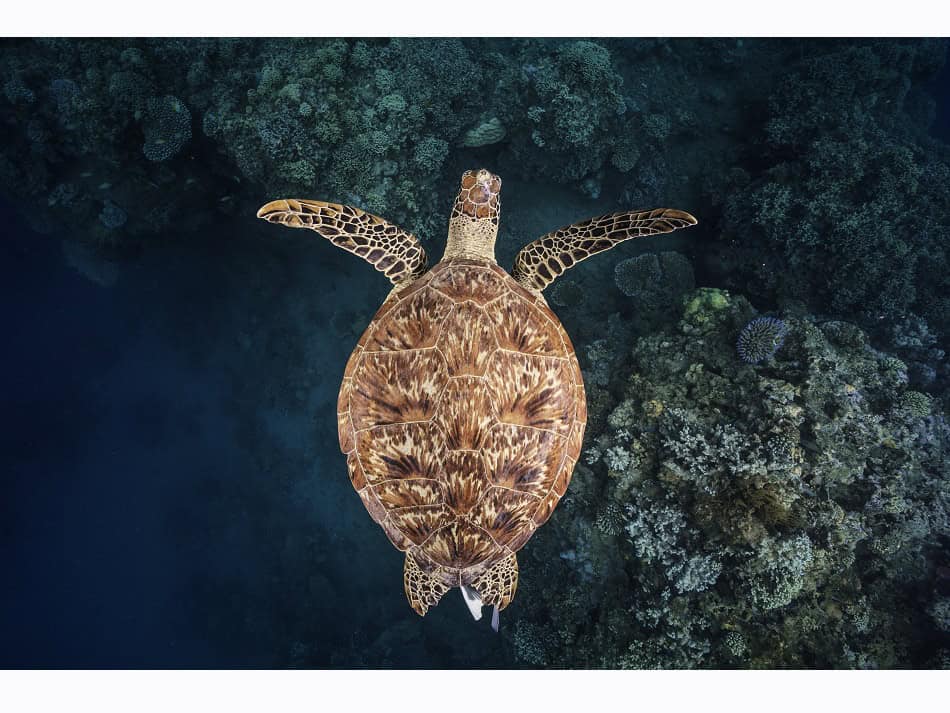
In its desire to promote and sustain traditional activities, the Park supports foot fishermen and fisherwomen to supervise their practice, notably with the temporary closure of reef flat zones to fishing. After only 3 to 4 months of rest, Park agents observed that octopus were more numerous and larger. Research is also underway to find an alternative to coral stone used by women for the production of their M’Sindzano beauty mask.
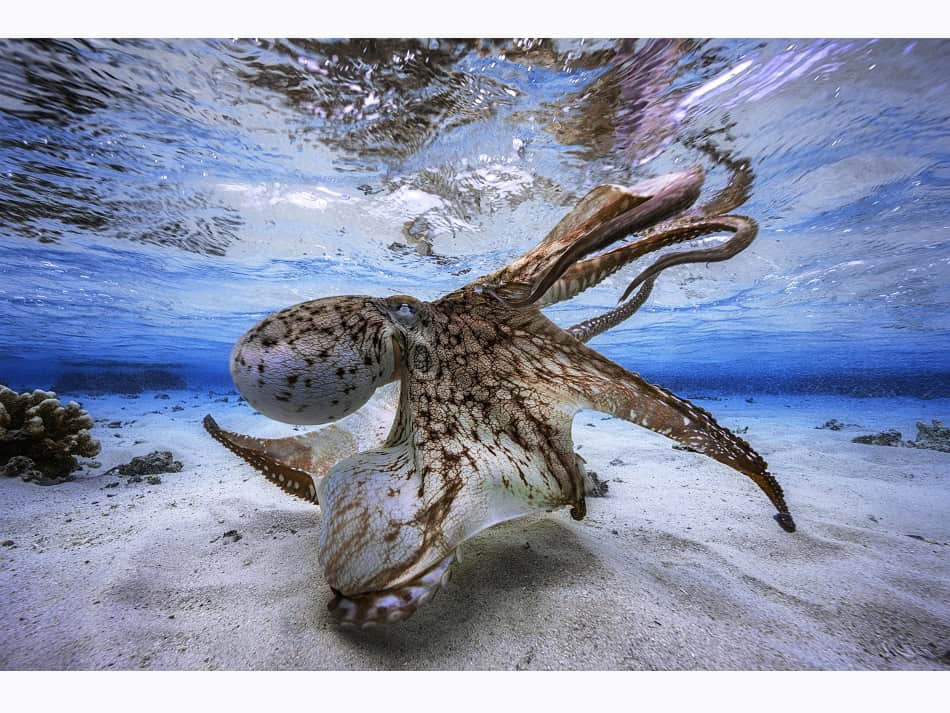
In parallel, the Park implements numerous awareness-raising actions each year with the populations. The ‘little lagoon scholars’ reach over 2000 children annually who benefit from field visits and snorkeling outings. Always directed at children, the Park organizes, every year in a different commune, the ‘First Bubbles in the Land of Coral’: on this occasion, it offers a diving baptism to one hundred young participants.
The Marine Natural Park of Mayotte also animates the participatory network TsiÔno (‘I saw’ in Shimaore, the local language), inviting all sea users to share their observations of remarkable species via a dedicated web platform: www.tsiono.fr
Rules for approaching animals in the lagoon
Since October 1, 2018, a prefectural decree includes new rules for approaching marine mammals in Mayotte. It is now no longer possible to enter the water with them.
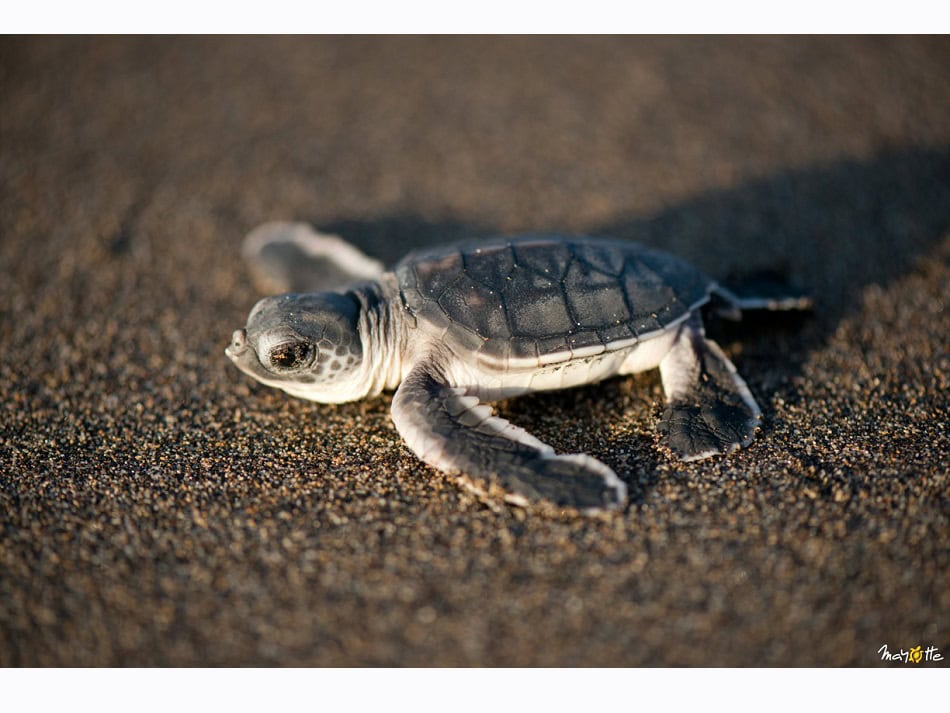
– Turtles– During nesting on Mayotte’s beaches, it is necessary to adhere to strict guidelines. Most nesting beaches are closed to the public after nightfall. If one finds themselves on a beach where a turtle is nesting, no light source should be lit. The best solution is to join nesting outings with guides trained by associations such as Oulanga Na Nyamba. https://oulangananyamba.com
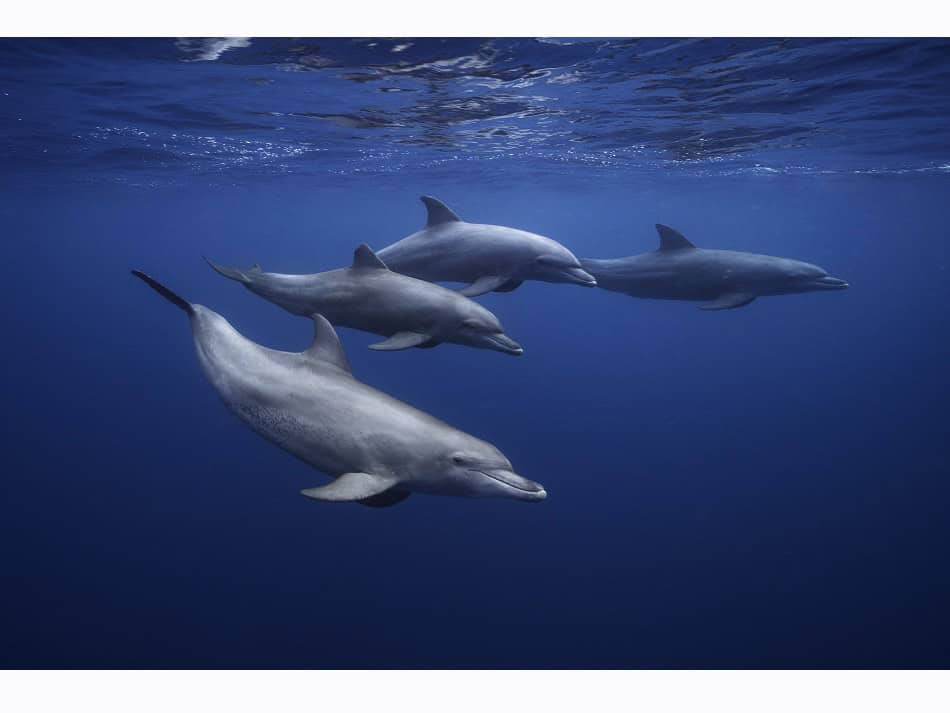
– Whales, Indian Ocean bottlenose dolphins (Tursiops aduncus) and dugongs – The new decree defines minimum observation distances: for humpback whales, it is advisable not to intentionally cross the threshold of 100 meters from the animal; for bottlenose dolphins and dugongs, this threshold is set at 50 meters.
– For all marine mammals – It is forbidden to position oneself on the path of marine mammals or to pursue them; the presence of 2 boats maximum is allowed in the area within 300 meters around the animals to avoid encirclement; the speed of movement in the area within 300 meters is limited to 5 knots and, for safety reasons, the engines of boats must not be turned off during the observation period. By air (ULM), intentional flying over marine mammals is prohibited below 150 meters.
The Marine Natural Park has also established an environmental certification for local operators keen to register their excursions in an eco-responsible approach: High Quality Whale Watching. This label is a registered trademark of ACCOBAMS (Agreement on the Conservation of Cetaceans of the Black Sea, Mediterranean Sea, and contiguous Atlantic area) and developed jointly with the Pelagos Sanctuary. Operators already labeled commit notably to respecting the charter for a respectful approach to marine mammals in Mayotte.
DDiscover the DIVING brochure of the Mayotte tourist office
Prepare your stay
Time difference : +1h compared to the mainland from the end of March to the end of October, + 2h from the end of October to the end of March. Reunion Island is 1h ahead of Mayotte all year round.
Documents : for French nationals, an ID card is sufficient to stay on the island. Citizens of the European Union must bring their valid passport. A visa is required for non-European Union foreigners.
Language and currency : French (official language), Shimaore and Kibushi (regional languages) and purchases are made in Euros. Note, foreign currencies cannot be exchanged on the island, which has about thirty cashpoints and fifty ATMs (mostly in Mamoudzou).
Health : no vaccine is required. Malaria is rare and simple protection against mos-
quitoes is sufficient. Tap water is potable.
Flights : Air Austral and Corsair offer flights from Paris with, notably, Air Austral flights directly linking Charles de Gaulle airport to Mamoudzou twice a week. Corsair provides flights departing from Lyon and Marseille. Both companies offer an additional 20-kilo baggage allowance for divers upon presentation of a diving certificate.
Covid-19 : PCR or antigen test less than 24 hours old and unvaccinated people must justify an essential reason to travel to the territory.
opening image © Gaby Barathieu