


A threatened biodiversity hotspot
The Antillean arc is considered a true biodiversity « hotspot » due to its significant endemism and variety of both terrestrial and marine species. Among these species, corals play a crucial role by forming ecosystems with recognized ecological functionalities. However, the survival of these fragile organisms is now highly jeopardized, not in the medium or long term, but in the near future.
Coral disease: an expanding plague
Since 2019, a devastating coral disease known as Stony Corals Tissue Loss Disease, has emerged. Originating from Florida, this disease has spread across more than 28 Caribbean territories, from the Bahamas to Mexico, including the French Antilles. Of mysterious origin, it has severely affected more than 30 coral species, including pillar corals, maze corals, star corals, and starlet corals. In some areas, these species have suffered losses of more than 90%. In Guadeloupe and Martinique, where the disease arrived in 2021, the studied coral reefs have seen their diversity irreversibly decrease by nearly 30%.
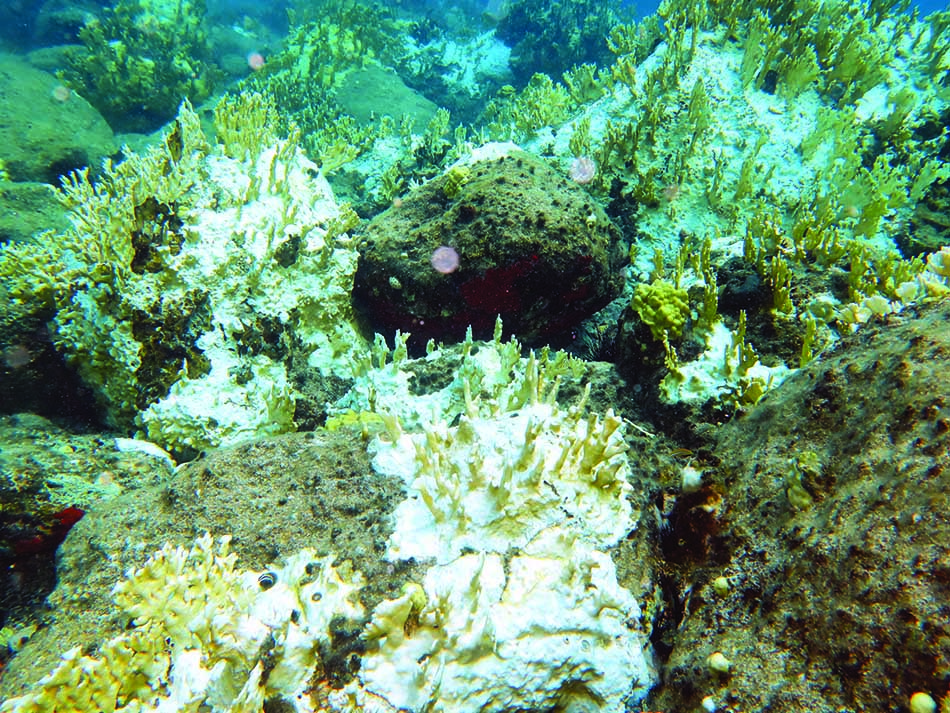
Diadema urchins dying off
In 2022, a new ecological crisis struck: Diadema urchins, of the species Diadema antillarum, were decimated by a sudden disease. Appearing in St. Thomas (U.S. Virgin Islands) in January 2022, this epidemic spread throughout the Caribbean region in less than a year due to ocean currents and ship ballast water. Depending on the area, between 70% and 99% of the Diadema urchin population disappeared. Once infected, these urchins die in less than 15 days due to the attack on their vascular system. In April 2023, the parasite Philaster apodigitiformis, usually associated with fish, was identified as the cause of this crisis.
The absence of the Diadema urchin is catastrophic. These macro-algae grazers are essential for reef health, as their disappearance leads to an algae proliferation that suffocates corals. In Guadeloupe, the Diadema urchin populations, already reduced, have nearly vanished.
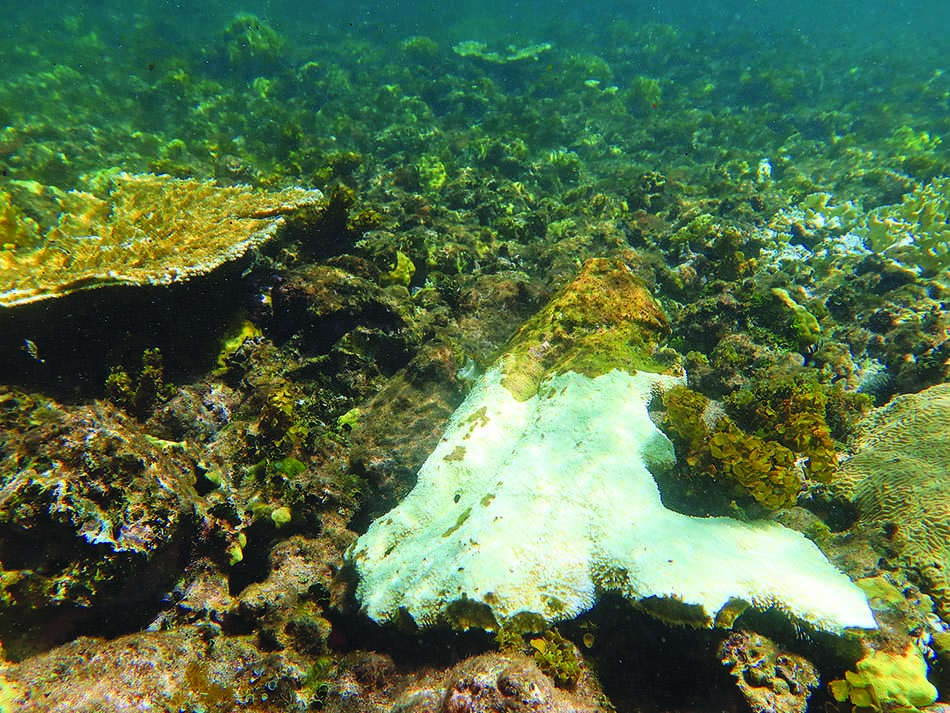
2023: alarming warming
In May-June 2023, NOAA (National Oceanic and Atmospheric Administration) warned of significant warming of Caribbean waters linked to the climate phenomenon El Niño. This warming could trigger massive coral bleaching, a phenomenon where corals, subjected to thermal stress, expel their symbiotic algae, the zooxanthellae. Although bleached corals are not dead, if they endure this stress for too long, death is inevitable.
Coral bleaching history:
- 1995, 1998, 2005: sporadic events in certain Caribbean areas.
- 2023: an unprecedented intensity bleaching, with temperatures exceeding 31°C for several weeks.
In Guadeloupe, elkhorn corals (Acropora sp.), already vulnerable, bleached in less than two weeks, while one of the last staghorn coral massifs (Acropora cervicornis), located in Guadeloupe National Park, disappeared in just a few weeks. This area was recently made a sanctuary and was supposed to be physically protected.
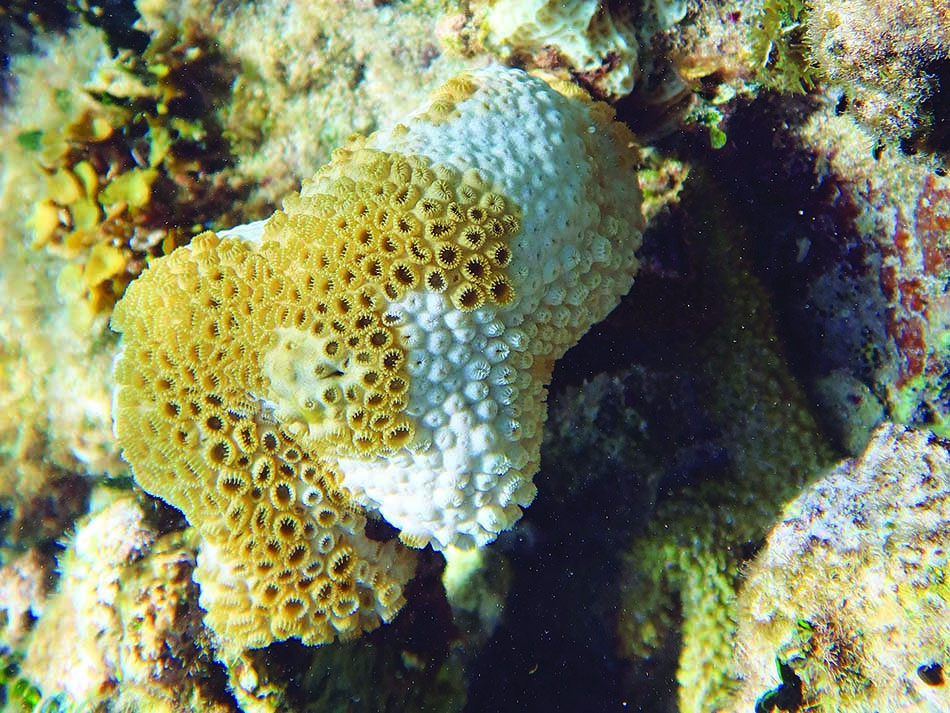
A threatened diversity
Other species, such as hydrozoans, fire corals, anemones, and even gorgonians, known for their robustness, are also undergoing bleaching. In four years, the coral reefs of the Antillean arc have faced three major events threatening their future.
The resilience of coral reefs
Scientific studies show that coral reefs can demonstrate great resilience, provided they benefit from conditions favorable to their regeneration. Unfortunately, human activities, such as overfishing, wastewater discharge, and intensive agriculture, complicate their recovery.
A glimmer of hope?
Currently, temperatures seem to have slightly dropped, and dives conducted by some clubs indicate that some coral colonies appear to be regaining color. It’s a glimmer of hope! However, we will need to be patient to assess the resilience capacity of these precious ecosystems.
This article, initially written by Florian Labadie for the print edition of PLONGEZ!, has been adapted for the web.
Images © Florian Labadie.