


Diving on Sand: An Observation Challenge
The tropical reef wasn’t far, but that day, in Guadeloupe, we chose a dive on the sand. At first glance, this destination seems ungrateful, but it represents a true challenge for those who wish to train their gaze. In this apparent ‘uniform desert,’ unsuspected wonders are hidden, ready to be revealed.
In Search of the Heart Urchin
While scanning the ground, I sense a shape under the sand. It’s not obvious, but there’s something intriguing. To be sure, my hand ventures under the grains, my fingers feel a prickly sensation, but not too much. What I discover is a heart urchin (Meoma ventricosa), a large irregular sea urchin with short rust-colored spines.
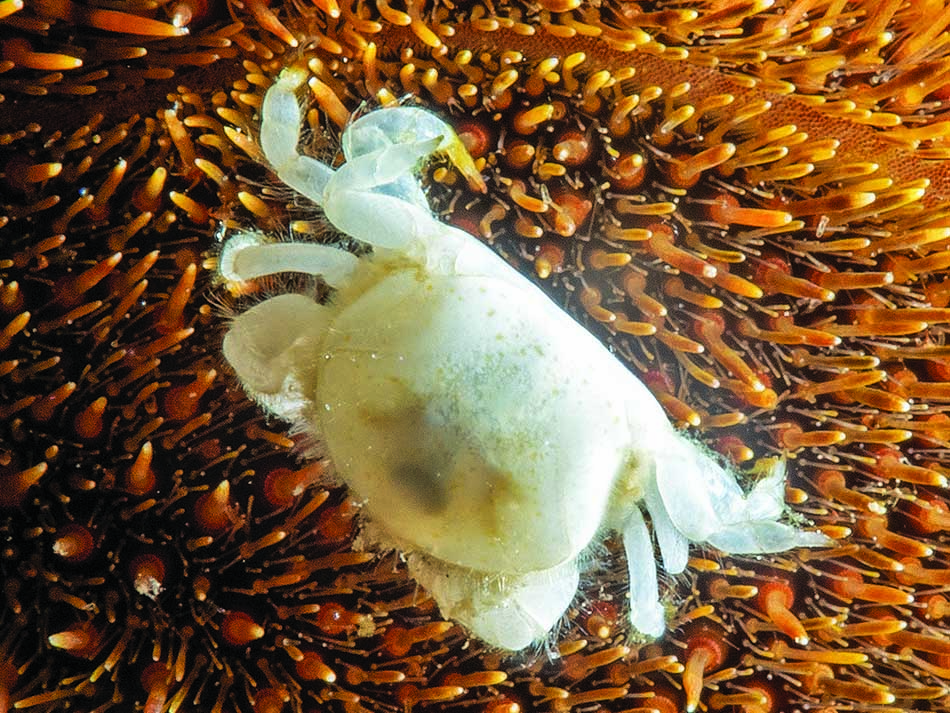
This animal is a burrower, moving under the sand while ingesting bites of sediment. It digests various foods: algae debris, worms, mollusks, and small crustaceans. Turning my heart urchin, I make another interesting encounter: a heart urchin pea crab (Dissodactylus primitivus). Clinging to the ventral side of the urchin, it feeds on its host’s spines, an unusual delicacy!
The Astonishing Disappearance of the Heart Urchin
I put my urchin back, but my observation isn’t over yet. Within minutes, it burrows into the sand to disappear completely. It seems to use its spines on its underside to dig its hole.
The Heart Urchin Around the World
It’s not necessary to go to the Caribbean to find heart urchins. In the Mediterranean, Spatangus purpureus is also found, quite similar in shape and size. Continuing to search in the sand, I come across another irregular urchin, more exotic: the ‘sand dollar’ (Leodia sexiesperforata). With its very short spines, it gives the impression of being a dead animal’s test. Yet, it quickly starts moving again and disappears under the sand.
Underwater Mysteries
This flat animal raises many questions: where are its organs hidden? How do its digestive system, nervous system, and muscles work? Underwater, there are still many mysteries to uncover!
This article, initially written by Steven Weinberg for the print edition of PLONGEZ!, has been adapted for the web.
Photos © Steven Weinberg