


These animals, often perceived as adorable creatures lounging on beaches or ice floes, elicit immediate sympathy. However, it is crucial to remember that they remain wild species, not accustomed to human presence, whose tranquility is frequently disrupted. This is why, in France and elsewhere, various research and protection programs are implemented, aiming to deepen our knowledge about these animals and preserve their habitats.
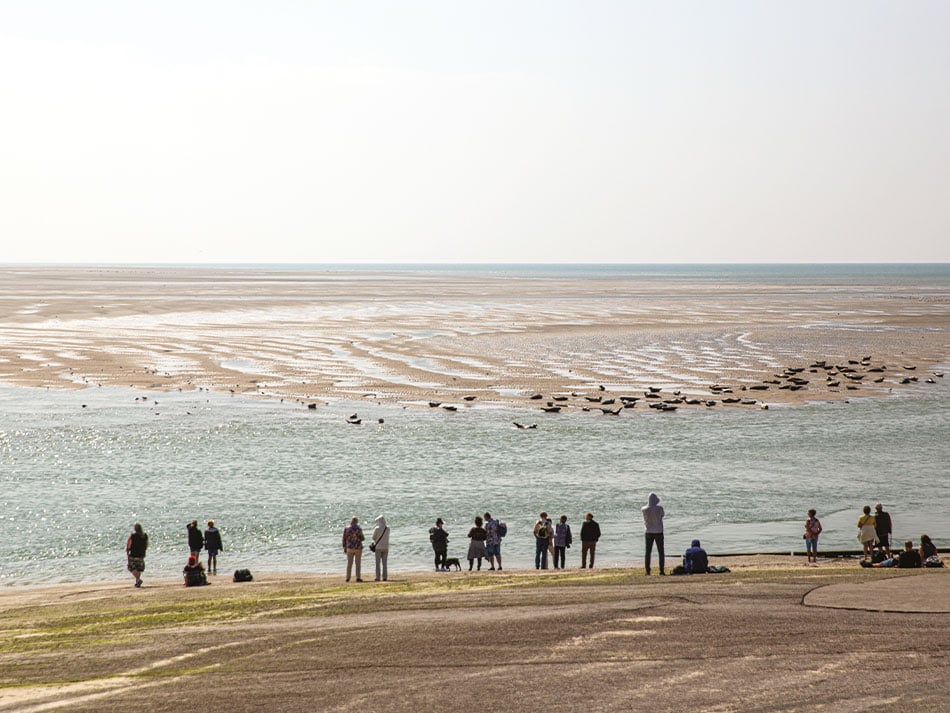
In France: The Grey and Common Seals of the Bay of Somme
After disappearing from the region in the 1960s, seals have gradually recolonized the northern coast of France, coming from other European colonies. The Bay of Somme is now a favored spot for these marine mammals. At the heart of the Picard estuaries and the Opal Sea Marine Natural Park, two species can be found: the common seal (Phoca vitulina) and the grey seal (Halichoerus grypus). The marine park, integrated into the French Office for Biodiversity (OFB), closely collaborates with researchers and local associations to study these animals and promote their flourishing in the region’s estuaries.
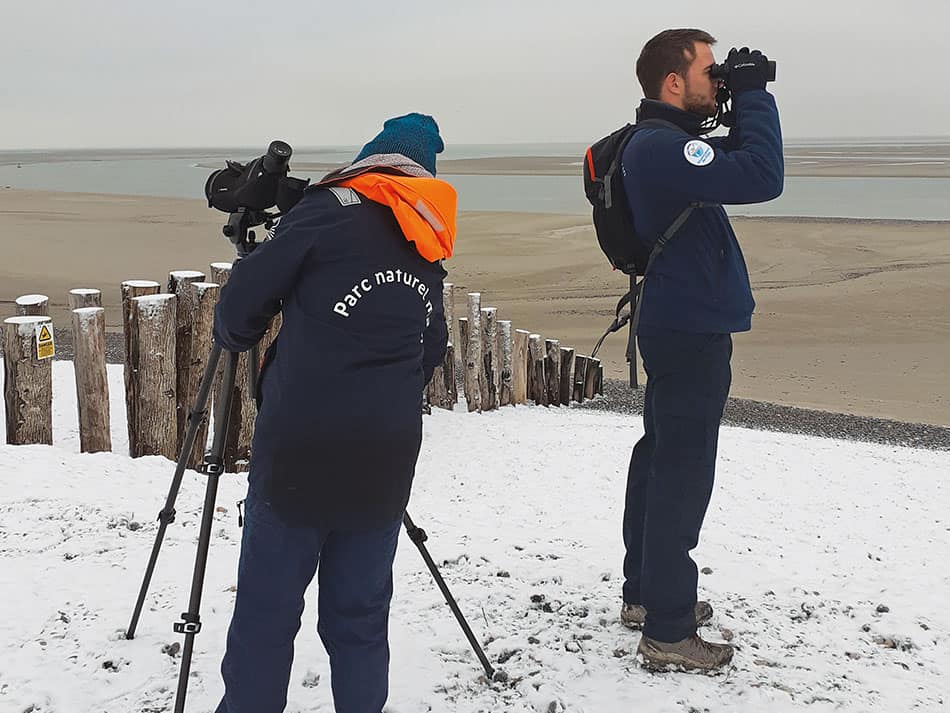
Carole Perron, Marine and Estuarine Ecosystems Project Manager at the OFB, explains: « It all started with a major project called Eco-Seal ». Launched in 2017 by the Chizé Biological Studies Center, this project aimed to establish solid scientific foundations for a better understanding of seals and their interactions with human activities. Three major studies were conducted as part of this initiative: population counting, tracking their movements, and analyzing their diet.
Three Key Studies for the Knowledge of Seals
- The population census: The first step involved determining the number of seals of each species in an area extending from the Belgian border to the Bay of Somme. « Subsequently, we funded several follow-ups of these counts in 2020, 2021, and 2023, » adds Carole Perron, « and thus realized that there had been an increase in the number of animals! » The results are encouraging: the number of grey seals increased from 400 in 2017 to 515 during the last campaign, while the population of common seals rose from 700 to 883 individuals. This is the largest colony of common seals in metropolitan France. « The aerial counts took place simultaneously during the period when seals are most numerous on the resting spots, that is, in summer » specifies the project manager.
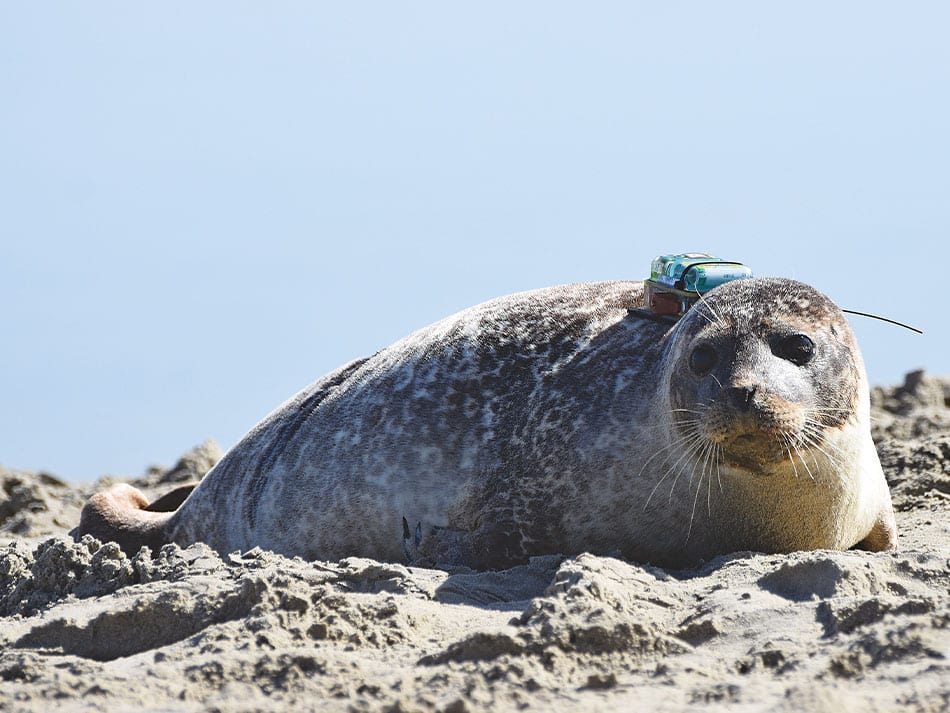
- Tracking movements: This study allowed mapping the hunting areas of seals and assessing the time they spend in the waters of the marine park. A first phase was conducted between 2008 and 2012, then renewed between 2019 and 2020. Tags were attached to 12 common seals and 15 grey seals to collect the data. « This study revealed that common seals are rather sedentary animals, meaning they stay relatively close to the shores and spend 88% of their time within the marine park. Grey seals, on the other hand, are great travelers and only spend 41% of the time in our waters. They can swim to the United Kingdom, Germany, the Netherlands, and only return between spring and autumn to rest or give birth, » explains Carole Perron. Although sometimes sharing the same resting places, the two species exhibit different behaviors.
- Analysis of the diet: The third study revealed that common seals and grey seals do not completely share the same diet. Although their prey overlap, the size of the prey differs. The analysis of faeces (droppings) collected on resting spots showed that « the diet of common seals is composed of more than 80% flatfish (plaice, flounder, common sole, pole sole, small sole, partridge sole). For grey seals, it is composed, for more than half, of flatfish (plaice, flounder, common sole…), one-third round fish (mainly herring), and about 10% mollusks (cephalopods). »
Combating Disturbance: A Major Challenge
The return of seals to the coast has sparked genuine public interest, leading to an increase in the number of observers. « It is essential to implement actions to minimize the disturbance of the animals as much as possible, » explains Carole Perron, « the resting spots are on the foreshore and are very easy to access. » Organized observation activities with guides are offered, but many people visit the sites independently, on foot, by kayak, or by boat. The marine park collaborates with local associations such as Picardie Nature, nature reserves, the Pelagis Observatory, and the National Marine Mammal Stranding Network to conduct communication and awareness campaigns. A code of good conduct is distributed to visitors, explaining the gestures to adopt to observe seals without disturbing them.
Did you enjoy this excerpt?
Read the full article.
READING TIME ≈ 15 min
Dive into the heart of the PLONGEZ! Magazine
To enjoy this article and its exclusive content, a modest contribution is required.