


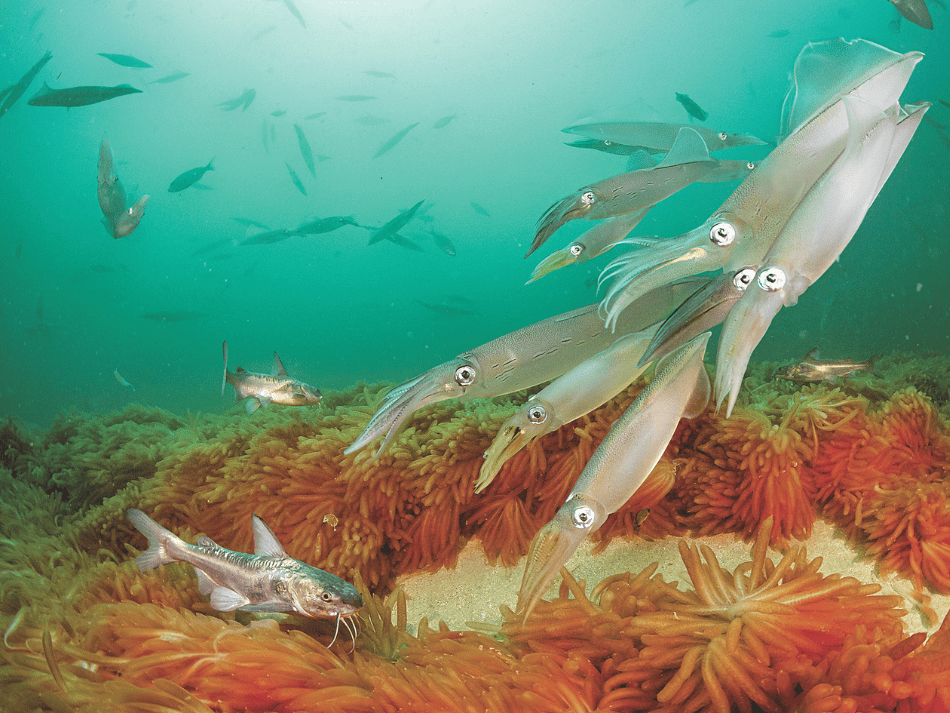
Located between Jeffreys Bay, known as « The Mecca of Surfing, » and the Tsitsikama National Park, in the heart of the Eastern Cape province in South Africa, the charming fishing village of St Francis Bay proves to be an idyllic spot for photographers and nature lovers. Between September and November, it is the perfect opportunity to dive amid thousands of squids, called « chokkas, » that come to reproduce.
A Historical Village
Born in the 1930s from rock and sand dunes, St Francis Bay has always been rich in fish and crustaceans. It was only in the 80s that South Africans discovered that Oyster Bay, literally « the bay of Oysters, » is also a true Eldorado for squid. Soon, fishermen flocked to St Francis Bay in search of what they called « white gold. » Initially, the fleet operated from the north base of the Kromme River, heading out to sea daily.
Over time, the fishing industry developed, resulting in an increase in the number of boats, which became larger and equipped with crew cabins, allowing them to fish longer. The arrival of the first freezer ships in the early 90s enabled boats to stay at sea for up to three weeks, provided the crew had enough supplies and water. However, at that time, St Francis did not have suitable infrastructure, and the fleet moved to Port Elizabeth until the opening of Port St Francis in 1997. Today, this port is the only privately-owned fishing port in South Africa and represents the last bastion of artisanal squid fishing, primarily exported to Europe.
The Life of « Chokkas »
The squid « Loligo vulgaris reynaudii, » present all year, has a relatively short lifespan (2 to 3 years) during which it reproduces and hunts in coastal waters. A voracious predator despite its size, it hunts in schools of small fish while being preyed upon by seals, sharks, and rays, as well as other sport fish species like tuna and mackerel. Some schools travel up to 200 km to reach the cold waters of South Africa’s west coast, while others remain close to breeding sites.
Did you enjoy this excerpt?
Read the full article.
READING TIME ≈ 7 min
Dive into the heart of DIVE! Magazine
To enjoy this article and its exclusive content, a modest contribution is required.