


Hypnosis, recognized in various contexts, offers divers and freedivers a means to calm anxieties, sharpen their skills, and achieve optimal comfort. Let’s explore this topic with an expert.
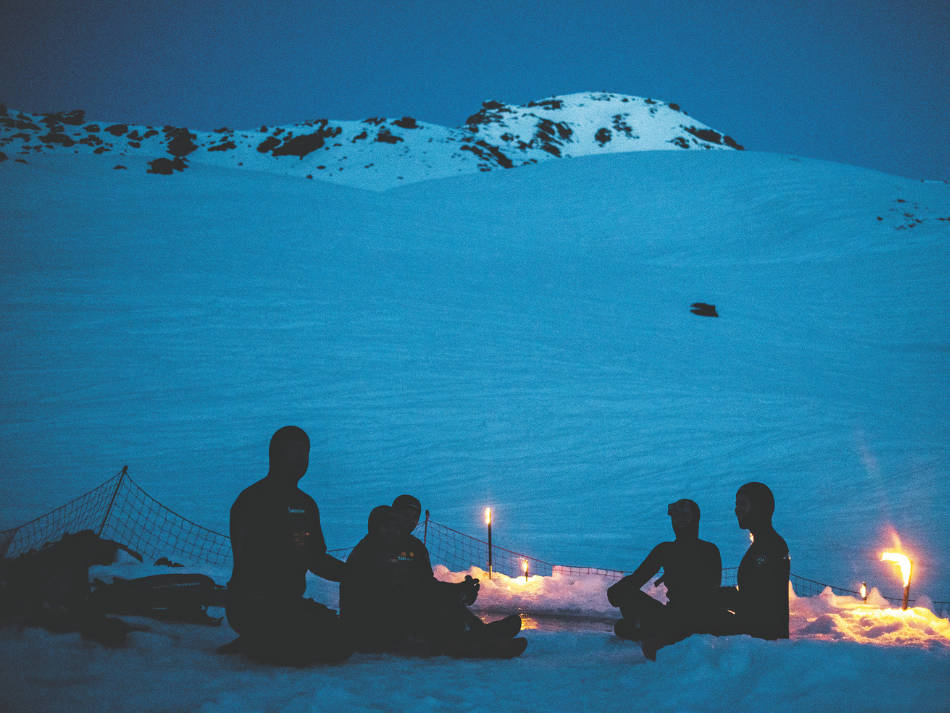
« The primary goal is to enhance our symbiosis with water and the sense of fulfillment it brings. Hypnosis is effective even without total conviction, says Sylvie Pouliquen, but open-mindedness is an asset! If the desire is there, it can facilitate qualities such as confidence, letting go, and stimulate learning. » Far from being limited to anxious individuals, this practice extends beyond!
Improving well-being in diving
For those without blockages, it’s a different approach, focused on the well-being that diving provides, surpassing the technical aspect. « It’s about reconnecting with oneself, emotions, nature, what I call the oceanic feeling, belonging to a soothing whole, explains Sylvie. Even if this feeling seems obvious, being conscious of it can amplify its effects. » Mental preparation before immersion, through hypnosis, positively impacts diving, notably cold management. The objective is the feeling, not performance.
Overcoming specific anxieties
It helps to unlock barriers to peaceful practice. As a 2nd-degree Bathysmed instructor (see Plongez! No.32), she offers sessions in pool or at sea, according to availability, with techniques such as sophrology, mindfulness meditation, and NLP. These modules, consisting of a dozen sessions of two or three hours, target stressed or anxious individuals. For others, a few sessions suffice. « Those with a specific block, Sylvie specifies, should opt for individual sessions. One session may be enough for some, several for others. »
Self-hypnosis: The key to autonomy
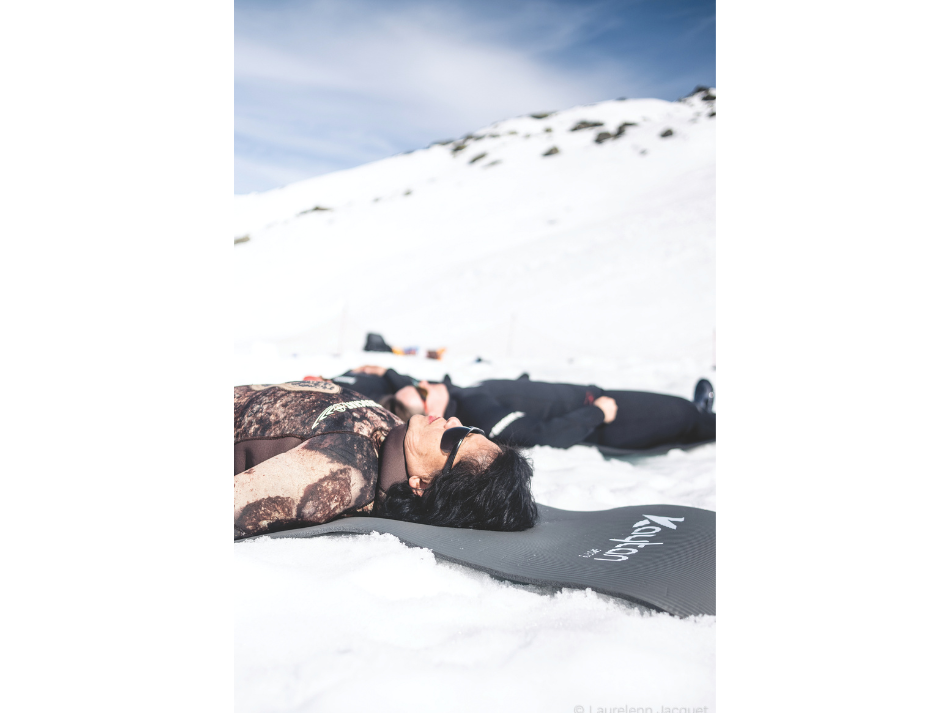
The essential, after a long or short program, is to achieve lasting beneficial effects. It’s about integrating techniques reusable in diving and daily life, for more « serenity, comfort, and relaxation ». Sessions should initiate self-hypnosis, « a dive in itself, rediscovering the letting go of diving. » The goal is autonomy, to recentralize before immersion. « Some do not need these questions, continues the therapist. But, for others, we activate and enhance these sensations. » Although intangible, they bring well-being and reconnection.
Freediving: sensations, mindset, and performance
In freediving, more than in scuba diving, motivations are varied. If well-being is paramount, targeted sessions also improve performance: time, depth, contractions, equalization, energy after a bad experience or competition. Tailored sessions adapted to needs.
Sessions in-office or remotely
Remote sessions are possible if one cannot be near the therapist. « All winter, explains Sylvie Pouliquen, I am part of an online freediving school, ‘Living Freediving’ based in Montpellier, which offers its freedivers a number of preparation sessions: yoga, breathing work, hypnosis. We work via video, in group sessions, and it works very well. » Remote hypnosis works thanks to the practitioner’s voice, its rhythm and tone altering the state of consciousness. A headset isolating external noise enhances effectiveness. « And, for some, adds the practitioner, being at home, in a perfectly secure environment, can facilitate entry into a state of hypnosis. »
Others prefer the physical presence of the therapist, favoring human contact. Going to the office or the diving site for Hypnosis & Freediving workshops is a first step, opening up to increased receptivity. « Ideally, of course, to have a session just before a dive, whether in a pool or in a natural environment. When one immerses, even if no longer in a state of hypnosis, the sensations reactivate. »
Where to find a hypnosis practitioner for diving?
Currently, there is no dedicated platform to find a « diving » therapist. Inquire with your club, especially for freedivers. « We hope to set up, in the near future, a ‘well-being pool’ and bring our activity together so that the interested public can easily know who to contact, » concludes Sylvie Pouliquen.
To learn more: www.hypnee.com
This article, initially written by Isabelle Croizeau for the print edition of PLONGEZ!, has been adapted for the web.